


💛 A quick favor, if you've got a second.
We're really happy that you chose to read one of our stories and sincerely hope you'll stick around to read more. We took our paywall down — for now — but that won't last forever, and when the gate goes back up, we'd love for you to already be on the inside.
It's free. So please enter your email here and don't forget to like and follow us on all of your favorite Social Media platforms!
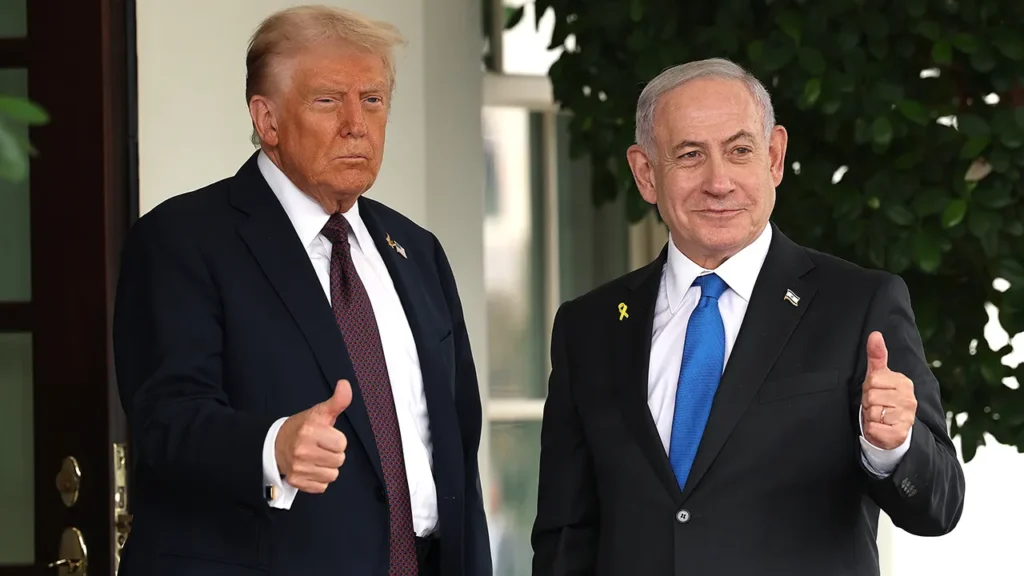
The U.S.-Israel Education Association has spent the past 15 years organizing visits for American lawmakers to experience firsthand the security, technological and geopolitical dimensions of one of Washington’s most significant bilateral relationships. Since its founding in 2011, USIEA has facilitated dozens of congressional trips designed to deepen understanding of shared interests between the two nations. Founder and President Heather Johnston recently reflected on the organization’s milestone anniversary and its role in shaping policy decisions across multiple administrations.
Johnston recounted how the organization’s initial mission took shape after meeting then-House Majority Leader Eric Cantor, who had been seeking someone to lead such educational tours for two years. The first delegation included five members of the House Armed Services Committee, who were presented with Israel’s newly declassified Iron Dome missile defense system. Prime Minister Benjamin Netanyahu authorized the disclosure specifically so American lawmakers could examine the advanced technology firsthand.
That initial exposure proved consequential for U.S. defense policy. The five House members were so impressed by Iron Dome’s capabilities that they began coordinating with other colleagues upon their return to Washington. Within weeks, they had met with 54 members of Congress, and less than three months later, lawmakers had tripled the federal budget allocation for the Iron Dome program.
Netanyahu credited Johnston and USIEA with strengthening the alliance, stating that the organization helped secure support for joint American-Israeli defense and technological projects. Former U.S. Ambassador to Israel David Friedman characterized the 15-year relationship as resembling an “EKG” with significant fluctuations, though he noted an overall positive trajectory. Friedman emphasized that USIEA distinguished itself through its practical focus on concrete cooperation areas, from defense funding to establishing a Food and Drug Administration office in Israel.
Current U.S. Ambassador Mike Huckabee argued that American lawmakers increasingly recognized Israel as a source of genuine technological, medical and security value to the United States. He highlighted the deepening military cooperation between the two nations, particularly regarding Iranian threats. Huckabee noted that joint military operations in 2025 and early 2026 demonstrated close operational integration, with American and Israeli aircraft and personnel conducting coordinated missions.
Beyond military matters, Huckabee contended that ground-level exposure to Israeli society challenged misconceptions held by visiting lawmakers. He pointed to Arab citizens holding senior positions in Israeli government, courts and military as examples of realities that often surprised American visitors. Such firsthand observations, he argued, effectively countered misinformation about the country.
Johnston indicated that USIEA’s work increasingly focuses on emerging areas of cooperation rather than established partnerships. She emphasized that the organization seeks to showcase future collaborative possibilities between the United States and Israel, positioning itself at the forefront of bilateral innovation and strategic coordination.



More Stories
Federal voting arrest in New Jersey adds new pressure point in Sherrill-Trump standoff
Colombia backs Trump security push while limiting U.S. role in anti-gang operations
Former NFL cheerleader and ex-aide face off in close Rhode Island GOP primary