

💛 A quick favor, if you've got a second.
We're really happy that you chose to read one of our stories and sincerely hope you'll stick around to read more. We took our paywall down — for now — but that won't last forever, and when the gate goes back up, we'd love for you to already be on the inside.
It's free. So please enter your email here and don't forget to like and follow us on all of your favorite Social Media platforms!
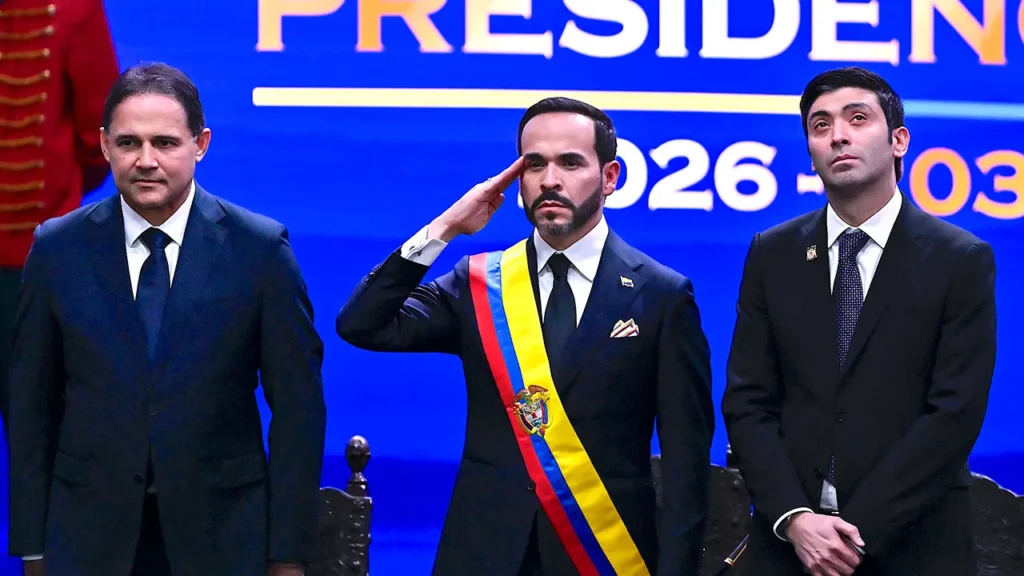
Colombia’s conservative leader Abelardo de la Espriella, nicknamed “El Tigre,” officially assumed the presidency Friday in a ceremony that underscores a broader rightward political movement sweeping Latin America. The inauguration marked a decisive break from four years of socialist governance under former President Gustavo Petro, whose “Total Peace” strategy and expansion of coca cultivation drew criticism from Washington and security-focused policymakers across the region.
De la Espriella’s swearing-in drew an international audience reflecting his administration’s alignment with the hemisphere’s conservative bloc. Argentine President Javier Milei, Ecuador’s Daniel Noboa and Chile’s José Antonio Kast attended the ceremony at the Pichincha Battalion military base in Cali, as did U.S. Acting Attorney General Todd Blanche. Spain’s King Felipe VI and FIFA President Gianni Infantino were also present, according to wire reports.
“I have come to close a long chapter of national resignation and, together with the people, embark on the most profound transformation of our destiny,” de la Espriella stated during his inaugural address. “The time has come to restore order, authority, and freedom.” Among his first presidential acts was joining The Shield of the Americas, an alliance founded by President Donald Trump.
As a longstanding U.S. security partner and key South American ally, Colombia hosts hundreds of American companies and receives substantial U.S. security assistance. The nation’s political and security trajectory directly influences regional migration patterns, organized crime networks and drug trafficking flows throughout the Western Hemisphere, making the leadership transition significant for Washington policymakers.
De la Espriella has pledged to rebuild strategic partnerships with the United States, restore full diplomatic relations with Israel and adopt a harder line against the authoritarian regimes governing Venezuela, Cuba and Nicaragua. These foreign policy commitments represent a stark reversal from Petro’s approach and signal deeper integration with U.S. regional security objectives.
Despite commanding the presidency, de la Espriella faces severe fiscal constraints that will limit his governing options. Colombia’s 2026 budget deficit is tracking near 6.5 to 6.7 percent of gross domestic product, with a financing gap approaching $34 billion, according to analysts. The International Monetary Fund projects mere 2.3 percent economic growth this year, hampering the government’s ability to fund new initiatives without spending cuts or revenue increases.
Violence remains an urgent challenge, with the first half of 2026 recording the highest homicide count for any opening semester in a decade, according to security analysts. Criminal organizations and guerrilla groups have expanded territorial control significantly since 2022, complicating de la Espriella’s law-and-order mandate and requiring sustained investment in security operations beyond the initial 100-day period.
Legislative fragmentation poses an additional obstacle to the new president’s agenda. Although de la Espriella won the election, his party holds only five Senate seats, while Petro’s Historic Pact remains the largest individual congressional bloc. Advancing security reforms, fiscal legislation and economic initiatives will require building coalitions with centrist and traditional parties across virtually every major proposal.
Analysts caution against judging the administration’s performance solely on immediate results. Success during the critical first 100 days will likely depend on whether de la Espriella establishes credibility, assembles competent governing personnel and demonstrates capacity to convert campaign rhetoric into coherent policy execution rather than achieving measurable outcomes in security or fiscal matters.
Key decisions that will signal the administration’s direction include abandoning Petro’s ELN negotiations, resuming aerial coca fumigation, expanding intelligence cooperation with Washington, formalizing Israel engagement and introducing a credible fiscal adjustment program. These early moves will determine whether Colombia’s new conservative government can fulfill its ambitious agenda or whether economic and political realities will force substantial concessions.

More Stories
Federal voting arrest in New Jersey adds new pressure point in Sherrill-Trump standoff
Colombia backs Trump security push while limiting U.S. role in anti-gang operations
Former NFL cheerleader and ex-aide face off in close Rhode Island GOP primary