



💛 A quick favor, if you've got a second.
We're really happy that you chose to read one of our stories and sincerely hope you'll stick around to read more. We took our paywall down — for now — but that won't last forever, and when the gate goes back up, we'd love for you to already be on the inside.
It's free. So please enter your email here and don't forget to like and follow us on all of your favorite Social Media platforms!
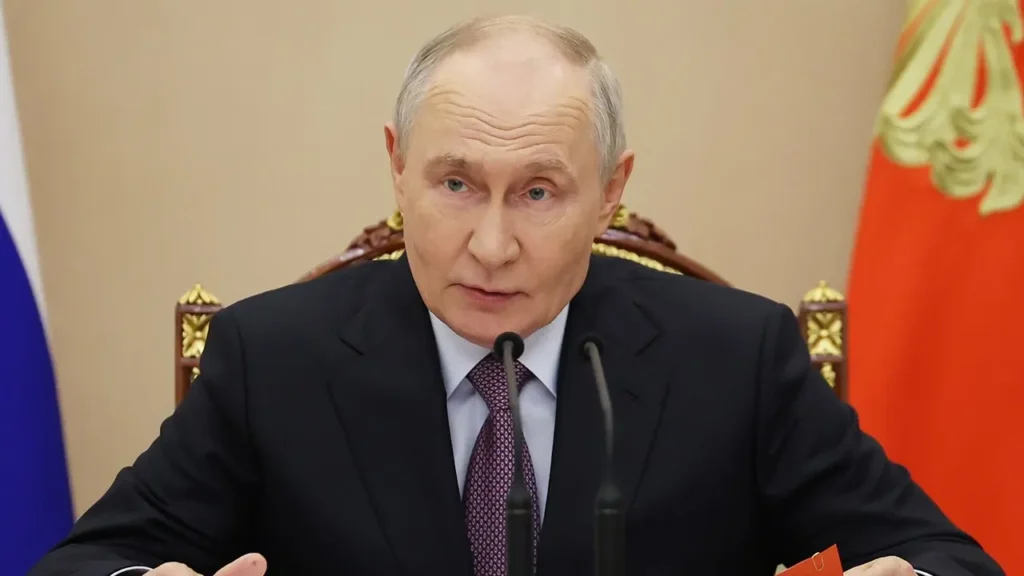
American intelligence agencies have determined that Russian President Vladimir Putin could strike a NATO member state in coming years as part of a strategy to destabilize the alliance and challenge its foundational Article 5 mutual defense clause, according to newly released assessments. The analysis represents a significant shift from previous U.S. intelligence judgments that dismissed such action while Russia remained engaged in its ongoing war against Ukraine, The Wall Street Journal reported.
Putin’s calculus may have shifted as Ukraine advances militarily and as Moscow seeks a strategic victory, U.S. and European officials have noted. Intelligence agencies have already documented what they characterize as probing actions, including a drone strike that damaged a residential building in Romania in May and cruise missile strikes in Poland both late last month—incidents officials view as tests of NATO’s resolve and cohesion.
Any Russian attack would likely be circumscribed in scope, ranging from cyber operations to small-scale ground incursions, with the Baltic states and Poland emerging as the most probable targets, according to the intelligence assessment. The potential assault could occur at any point between this fall and 2029, though experts emphasize uncertainty about the precise timing and nature of any military action.
Article 5 of the North Atlantic Treaty stipulates that an armed attack against one member constitutes an attack against all. However, intelligence officials and security analysts express concern that a deliberately limited attack—particularly a cyberattack—could create ambiguity about NATO’s obligations and expose potential fractures in the alliance’s response mechanisms.
Heather Conley, a senior fellow at the American Enterprise Institute, emphasized to the Journal that Russia’s long-standing objective has been undermining NATO’s credibility and wedging distance between the United States and its European partners. “The question mark is how the United States would respond in that case,” she said, highlighting the strategic uncertainty that could result from a sub-Article 5 threshold attack.
The Pentagon dismissed claims that U.S. military stockpiles have been dangerously depleted by weapons transfers to Ukraine. Chief Pentagon spokesman Sean Parnell told the Journal that American forces maintain adequate munitions and readiness across multiple commands, warning that adversaries miscalculating American resolve “will discover the truth the hard way.”
NATO leadership acknowledged the challenge posed by potential limited aggression that falls below conventional attack thresholds. Col. Martin O’Donnell, a NATO spokesman, told the Journal that the alliance is continuously preparing for various scenarios and remains positioned to deter and defend against threats.


More Stories
Colombia backs Trump security push while limiting U.S. role in anti-gang operations
Chicago Mayor Issues Executive Order Requiring Contractor Diversity Disclosures and ICE Ties Reporting
Federal Prosecutors Convene Special Grand Jury to Investigate D.C. Schools’ Attendance and Graduation Practices