




💛 A quick favor, if you've got a second.
We're really happy that you chose to read one of our stories and sincerely hope you'll stick around to read more. We took our paywall down — for now — but that won't last forever, and when the gate goes back up, we'd love for you to already be on the inside.
It's free. So please enter your email here and don't forget to like and follow us on all of your favorite Social Media platforms!
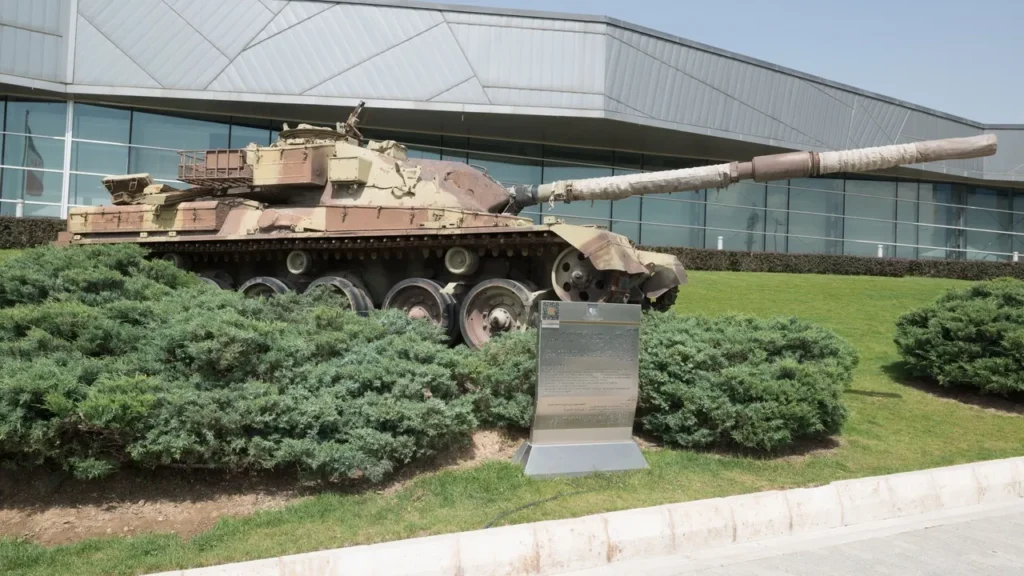
A veteran Pentagon strategist with nearly five decades of military experience argues that careful observers should focus on what Iran’s military is actually doing rather than what its government is saying. Recent reports indicate that elements of Iran’s 92nd Armored Division repositioned T-72 tanks toward southern approaches near Abadan on August 1, a movement that warrants serious analysis by defense planners and policymakers.
Military force posture often reveals strategic expectations more reliably than official statements, according to the analysis. When armies reposition conventional formations—particularly resource-intensive armored units—they typically do so because commanders anticipate operational requirements. The logistics demands of moving tanks across terrain are substantial enough that such movements rarely occur without genuine purpose.
The distinction between the Artesh, Iran’s conventional military force, and the Islamic Revolutionary Guard Corps carries significant weight in interpreting these movements. Unlike the IRGC, which manages Iran’s missile arsenal, drone programs and proxy forces, the Artesh exists primarily to defend Iranian territory against external threats. A repositioning by the Artesh suggests preparation for conventional defense rather than offensive operations against neighboring countries.
Military organizations reposition forces for multiple reasons: protecting vulnerable assets, conducting exercises, strengthening deterrence, signaling political resolve or preparing for evolving missions. Professional planners must determine which explanation best aligns with broader patterns of military activity. In this case, the most plausible interpretation involves preparation for potential conflict that could extend beyond the current exchange of missiles and airstrikes into direct engagement over Iranian territory.
History demonstrates why military movements deserve careful scrutiny. During the Cold War, NATO intelligence officers studied Warsaw Pact armored deployments continuously, learning that supporting logistics, engineers, artillery and reserve movements often proved more revealing than tank positions alone. Experienced strategists learned to read military behavior as physicians read symptoms—not as isolated facts but as evidence of a larger strategic condition.
The Ukraine conflict offers lessons about modern armor’s role. While some observers concluded tanks are obsolete, the war demonstrated a more nuanced reality: tanks without supporting infantry, engineers, air defense and electronic warfare become exceptionally vulnerable. However, armored forces remain essential for protected mobility, mobile firepower and terrain control. Iranian doctrine reflects this same understanding, with armored formations designed to support infantry, protect critical sites and raise the costs of escalation rather than defeat American forces in direct tank-versus-tank combat.
These military preparations coincide with ongoing diplomatic efforts. Oman-mediated contacts between Washington and Tehran have reportedly made progress on reopening the Strait of Hormuz and potentially broadening discussions on Iran’s nuclear program. To civilian observers, military repositioning during diplomatic negotiations may appear contradictory, but military professionals view simultaneous negotiation and preparation as prudent strategy rather than cynicism.
President Trump now faces the strategic challenge of converting military pressure into verifiable diplomatic results—including freedom of navigation through Hormuz, enforceable constraints on Iran’s nuclear capabilities and regional stability—before military objectives expand beyond what air power alone can achieve. The most difficult strategic decision historically has not been when to initiate military operations but when additional destruction ceases to produce proportionate political gains.
Military analysts emphasize that tanks themselves may prove incidental to the broader conflict. What matters is what Iran’s reported movements suggest about Tehran’s strategic calculations and expectations. Experienced planners must recognize when an adversary’s preparations create opportunities to prevent conflict rather than simply predicting where war might occur, providing statesmen the understanding necessary to preserve peace before military expectations solidify into military necessity.


More Stories
Colombia backs Trump security push while limiting U.S. role in anti-gang operations
Chicago Mayor Issues Executive Order Requiring Contractor Diversity Disclosures and ICE Ties Reporting
Federal Prosecutors Convene Special Grand Jury to Investigate D.C. Schools’ Attendance and Graduation Practices