

💛 A quick favor, if you've got a second.
We're really happy that you chose to read one of our stories and sincerely hope you'll stick around to read more. We took our paywall down — for now — but that won't last forever, and when the gate goes back up, we'd love for you to already be on the inside.
It's free. So please enter your email here and don't forget to like and follow us on all of your favorite Social Media platforms!
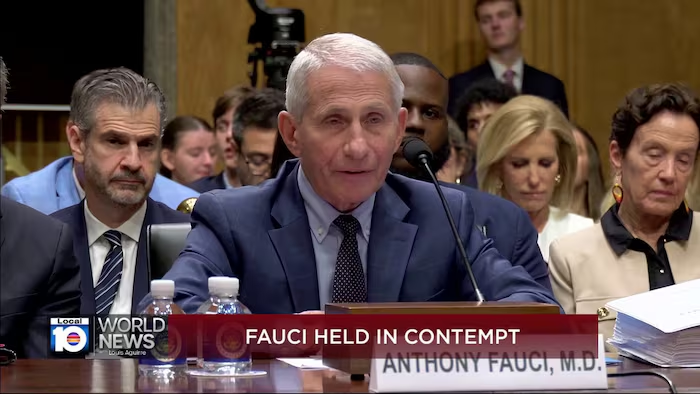
A Senate committee approved a contempt resolution Thursday against Dr. Anthony Fauci after he declined to answer questions during a hearing focused on his pandemic response, triggering a referral to the Justice Department for possible investigation. The chamber’s Homeland Security and Governmental Affairs Committee voted strictly along party lines on the measure, advancing questions about constitutional protections afforded to previously pardoned witnesses called to testify.
Fauci invoked his Fifth Amendment protection against self-incrimination more than 100 times at last week’s hearing, prompting Republican committee Chairman Rand Paul of Kentucky to push for the contempt finding. Paul argued that Fauci’s pardon from President Joe Biden last year eliminated any legitimate threat of prosecution, thereby invalidating his constitutional concerns and requiring him to comply with the committee’s questions.
The Kentucky Republican contended the central issue involved whether a pardoned witness could refuse testimony without penalty. “Dr. Fauci faced no risk of federal prosecution,” Paul stated during the vote. “All he had to do was tell the truth.” He emphasized the committee was not challenging Fauci’s judgment calls or public statements from years past, but rather his obligation to answer lawmakers’ inquiries.
Fauci’s legal representative, David Schertler, characterized the contempt vote as political retaliation motivated by Paul’s longstanding public campaign against the longtime infectious disease official. Schertler asserted his client had legitimate grounds for fearing criminal prosecution, pointing to Paul’s repeated calls for Fauci’s imprisonment and suggesting the senator intended to weaponize federal authorities.
Democrats unanimously opposed the resolution, agreeing with Fauci that he possessed reasonable cause to exercise his constitutional right given Republicans’ stated intentions to prosecute him. Senator Maggie Hassan of New Hampshire warned the vote would discourage future witnesses from appearing before Congress, knowing they face punishment regardless of whether they invoke constitutional protections.
Biden’s pardon covers conduct spanning 2014 through January 2025 but does not shield Fauci from state-level charges or false statement investigations into testimony the Justice Department deems inaccurate. The Trump administration has already questioned the validity of Biden’s pardons, citing his use of an autopen for official documents.
President Donald Trump endorsed potential prosecution of Fauci on Thursday, suggesting the former health official’s actions surpassed many criminal offenses. He compared Fauci’s situation to contempt cases involving two Trump administration officials, Steve Bannon and Peter Navarro, who faced jail time under the Biden administration for refusing congressional subpoenas.
Senate Judiciary Committee ranking Democrat Gary Peters of Michigan raised questions about the referral’s legal standing, noting Paul did not seek a full Senate vote where the 60 votes necessary for passage would likely prove unattainable. Peters cautioned that punishing witnesses for asserting Fifth Amendment rights would undermine Congress’s ability to compel future testimony and conduct oversight.

More Stories
Federal voting arrest in New Jersey adds new pressure point in Sherrill-Trump standoff
Colombia backs Trump security push while limiting U.S. role in anti-gang operations
Former NFL cheerleader and ex-aide face off in close Rhode Island GOP primary