

💛 A quick favor, if you've got a second.
We're really happy that you chose to read one of our stories and sincerely hope you'll stick around to read more. We took our paywall down — for now — but that won't last forever, and when the gate goes back up, we'd love for you to already be on the inside.
It's free. So please enter your email here and don't forget to like and follow us on all of your favorite Social Media platforms!
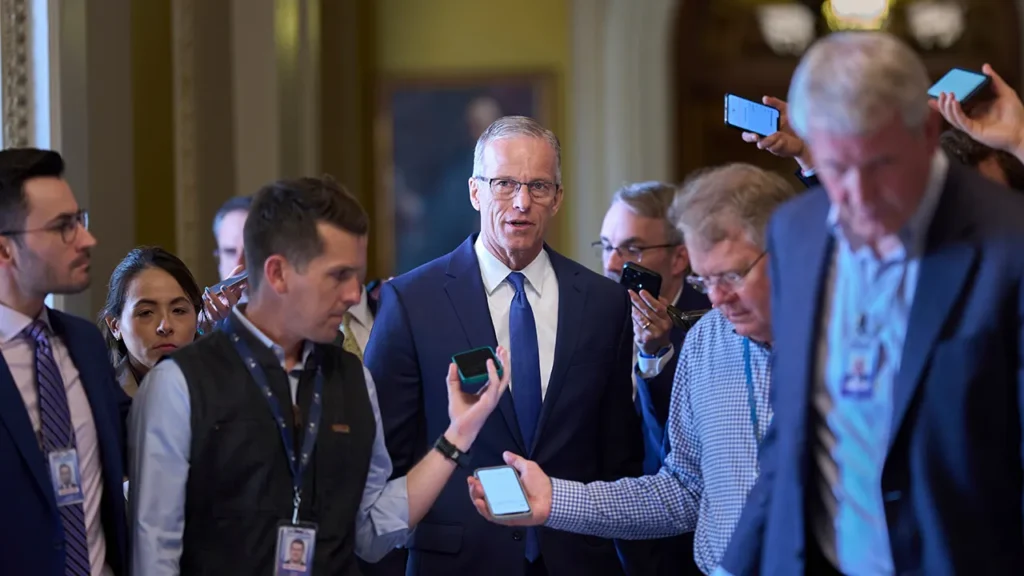
Although calendar summer persists, the autumn legislative agenda is already weighing heavily on the United States Senate. Lawmakers from both parties are scrambling to prevent a government shutdown while tackling numerous other priorities before the chamber breaks for recess. “The fiscal year begins October 1st each year,” said Sen. Chuck Grassley, R-Iowa, underscoring the urgency of passing funding measures. The House approved an interim spending bill in July that would maintain government operations through December 4.
Senate leadership is working to avoid a repeat of last year’s 43-day government closure. A bipartisan group of senators is pushing a measure that would fund federal operations through December 11, extending well past the November midterm elections. Senate Majority Leader John Thune, R-S.D., expressed optimism about passage in the coming days. The procedural vote to overcome a filibuster succeeded 89-4, with Democratic support proving essential to avoiding another shutdown crisis.
Confirming Todd Blanche as Attorney General represents the most significant priority for Republicans, though his path to confirmation remains uncertain. Sens. Thom Tillis, R-N.C., and John Cornyn, R-Texas, recently signaled support after receiving assurances regarding the anti-weaponization fund. Republicans can afford to lose only one more vote among their ranks, given that Sen. Susan Collins, R-Maine, has indicated opposition and former Majority Leader Mitch McConnell, R-Ky., is no longer in the chamber.
The Senate’s agenda extends far beyond spending and nominations. Lawmakers must address Russia sanctions legislation named after the late Sen. Lindsey Graham, R-S.C., advance a slate of unrelated nominations, approve a budget resolution to enable military funding reauthorization, and potentially tackle college sports regulation and cryptocurrency framework legislation. Sen. Roger Marshall, R-Kan., captured the challenge succinctly: “I feel like we’re trying to put 20 pounds of potatoes in a 10 pound bag.”
President Trump’s signature SAVE America Act, which would require citizenship verification for voting, faces an uncertain fate despite Trump’s insistence that it deserves prioritization. Senate Majority Leader Thune has acknowledged mathematical reality: the bill lacks sufficient votes to overcome a filibuster or secure Democratic support. The Senate has already rejected the measure twice, prompting Thune to state bluntly that they lack votes to eliminate the filibuster or flip ten Democrats.
Some Republicans have expressed frustration with leadership’s inability to deliver on promises made to party loyalists. Sen. Tommy Tuberville, R-Ala., characterized the situation differently, saying “I don’t think we overpromised. I think we wished it would work.” Many senators remain focused on returning home to campaign as control of the chamber hangs in the balance, with uncertainty surrounding the precise legislative roadmap for the coming days.

More Stories
Federal voting arrest in New Jersey adds new pressure point in Sherrill-Trump standoff
Colombia backs Trump security push while limiting U.S. role in anti-gang operations
Former NFL cheerleader and ex-aide face off in close Rhode Island GOP primary