
💛 A quick favor, if you've got a second.
We're really happy that you chose to read one of our stories and sincerely hope you'll stick around to read more. We took our paywall down — for now — but that won't last forever, and when the gate goes back up, we'd love for you to already be on the inside.
It's free. So please enter your email here and don't forget to like and follow us on all of your favorite Social Media platforms!
A Tehran newspaper’s investigation into supermarket theft this week has intensified concerns about Iran’s deteriorating economic conditions, as documented cases of customers concealing inexpensive groceries and consuming packaged goods without payment suggest households are reaching a breaking point. While the incidents reported by Jahan-e Sanat are anecdotal, economists say they corroborate broader data showing severe strain from inflation, currency devaluation and eroded purchasing power across Iranian communities.
Miad Maleki, an associate fellow at the Foundation for Defense of Democracies and former Treasury Department sanctions official, characterized Iran as already positioned within a critical economic zone. He described the unfolding crisis not as a singular catastrophic event but rather as a slow-motion deterioration encompassing currency collapse, extreme food price increases comparable to World War II-era levels, and a growing pattern of theft targeting basic staples as nutritional access fractures across broad segments of the population.
Annual food inflation reached between 112.5 and 113.8 percent in March 2026, according to data cited by Maleki, with bread and cereal prices surging 140 percent and dairy and egg products climbing 116.8 percent year-over-year. The Statistical Center of Iran documented matching figures showing comparable inflation rates for food and beverage categories during the same period.
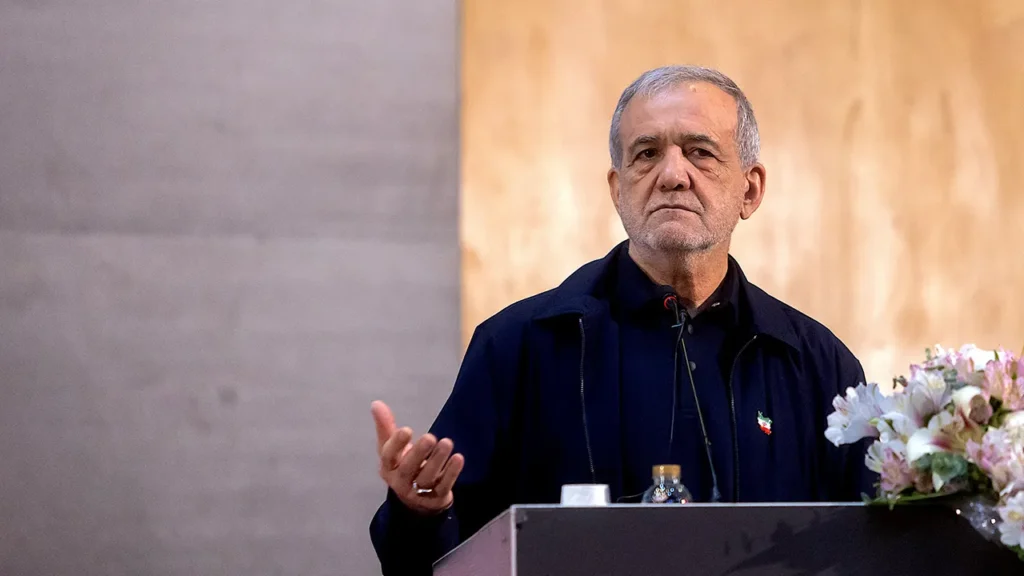
Iranian President Masoud Pezeshkian acknowledged on August 5 that the nation faces “difficulties and problems” while asserting Iran’s continued strength and international standing. State-affiliated Press TV reported that Pezeshkian characterized foreign pressure as deliberate attempts to provoke public unrest, though he did not directly address mounting food insecurity concerns.
The dollar’s value against the Iranian rial has surged dramatically, climbing from approximately 1.5 million rials in January to exceeding 1.94 million rials on the open market by July, intensifying household financial stress. Government intervention through monthly cash credits valued at roughly $7 at open-market rates has proven insufficient, particularly after authorities eliminated subsidized exchange rates for certain imports—a measure Maleki argues accelerated price increases further.
Maleki warned that food insecurity could catalyze renewed public demonstrations, citing the precedent of November 2019 protests triggered by a government-imposed gasoline price hike. He emphasized that Iran’s most destabilizing moments have historically stemmed from economic rather than ideological factors, though he cautioned that economic hardship does not guarantee immediate political transformation given the security apparatus’s demonstrated capacity for suppressing dissent.
A supermarket employee identified as Amirhossein reported witnessing multiple suspected thefts over a ten-month span, describing customers taking cheese, butter, baked goods and meat products. The worker attributed the incidents to poverty-driven desperation rather than criminal intent, suggesting individuals resorting to theft face extraordinary financial pressure.
Maleki cautioned that escalating inflation may intensify further should regional conflict conclude and wartime demand suppression lift from markets. He underscored that while a single newspaper’s crime reporting does not constitute definitive evidence of imminent governmental collapse, the accounts represent credible indicators layered atop verified macroeconomic data signaling systemic strain.

More Stories
Federal voting arrest in New Jersey adds new pressure point in Sherrill-Trump standoff
Colombia backs Trump security push while limiting U.S. role in anti-gang operations
Former NFL cheerleader and ex-aide face off in close Rhode Island GOP primary