

💛 A quick favor, if you've got a second.
We're really happy that you chose to read one of our stories and sincerely hope you'll stick around to read more. We took our paywall down — for now — but that won't last forever, and when the gate goes back up, we'd love for you to already be on the inside.
It's free. So please enter your email here and don't forget to like and follow us on all of your favorite Social Media platforms!
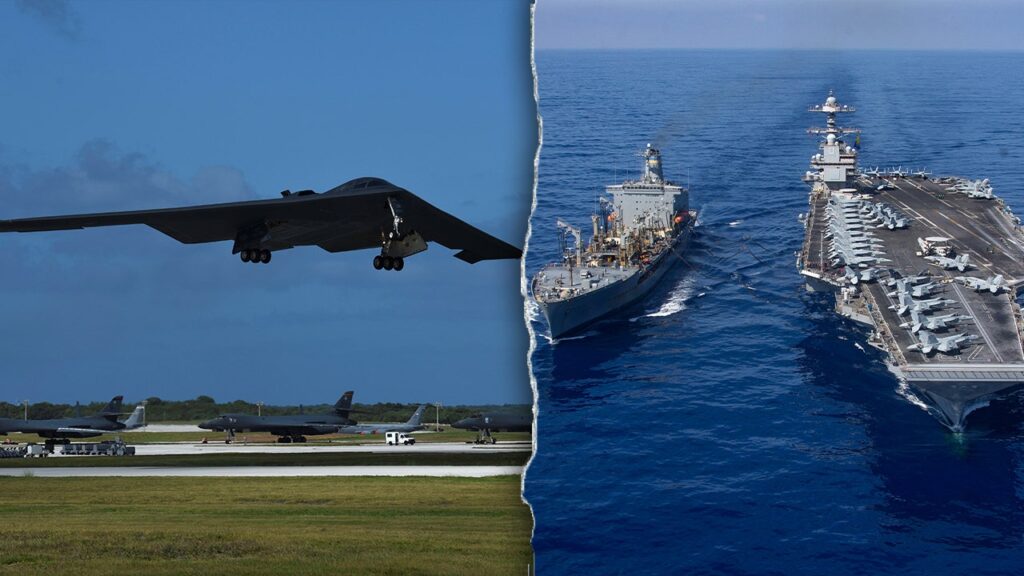
President Donald Trump has indicated at Camp David that U.S. policy toward Iran is entering a more confrontational phase, with objectives extending beyond nuclear disarmament to systematically reducing the Islamic Republic’s governmental capacity. American officials have warned that Washington will intensify military pressure until the regime reaches an unsustainable position, marking a significant departure from decades of diplomatic engagement.
Multiple cancellations of planned military strikes have created questions about U.S. strategic consistency, which Tehran—supported by Russia and China—has exploited to its advantage. The Trump administration appears to be banking on factional divisions within Iran’s Supreme National Security Council as a pathway to change, though critics question whether this approach addresses the regime’s fundamental nature.
Many Iranian citizens view potential pressure on the Islamic Republic’s infrastructure as a necessary precursor to governmental collapse, despite acknowledging the short-term hardships such disruption would impose. Tehran’s propaganda apparatus has countered with threats of retaliation, including potential activation of dormant terrorist networks across the Western world—capabilities the regime has refined over decades.
The Iranian state apparatus has relied for nearly five decades on transforming the nation into a military garrison while pursuing ideological expansion at the expense of economic development. Successive U.S. administrations have used diplomacy as the primary tool, yet negotiations have consistently allowed Tehran to advance strategic objectives while buying time between administrations.
Strategic vulnerability within the regime now centers on systems beyond military facilities: electrical grids, petroleum refineries, fuel distribution networks, and command-and-control infrastructure. Disruption of these systems would severely impede the Islamic Revolutionary Guard Corps’ ability to coordinate nationwide operations and maintain provincial control over an increasingly bankrupt state.
Experts argue that effective U.S. policy requires more than military pressure alone. A credible transition strategy, covert support for internal opposition movements, enhanced protection for dissidents, and closer intelligence coordination between American and Israeli agencies may be necessary to prevent post-collapse chaos while empowering Iranian citizens to determine their own governance.
Long-term stability in the Middle East depends on recognizing that the Islamic Republic’s ideological foundations leave minimal room for negotiated compromise, according to regional analysts. Without a comprehensive strategy addressing both immediate security concerns and post-regime transition planning, instability could extend across the broader region for years to come.

More Stories
Federal voting arrest in New Jersey adds new pressure point in Sherrill-Trump standoff
Colombia backs Trump security push while limiting U.S. role in anti-gang operations
Former NFL cheerleader and ex-aide face off in close Rhode Island GOP primary