

💛 A quick favor, if you've got a second.
We're really happy that you chose to read one of our stories and sincerely hope you'll stick around to read more. We took our paywall down — for now — but that won't last forever, and when the gate goes back up, we'd love for you to already be on the inside.
It's free. So please enter your email here and don't forget to like and follow us on all of your favorite Social Media platforms!
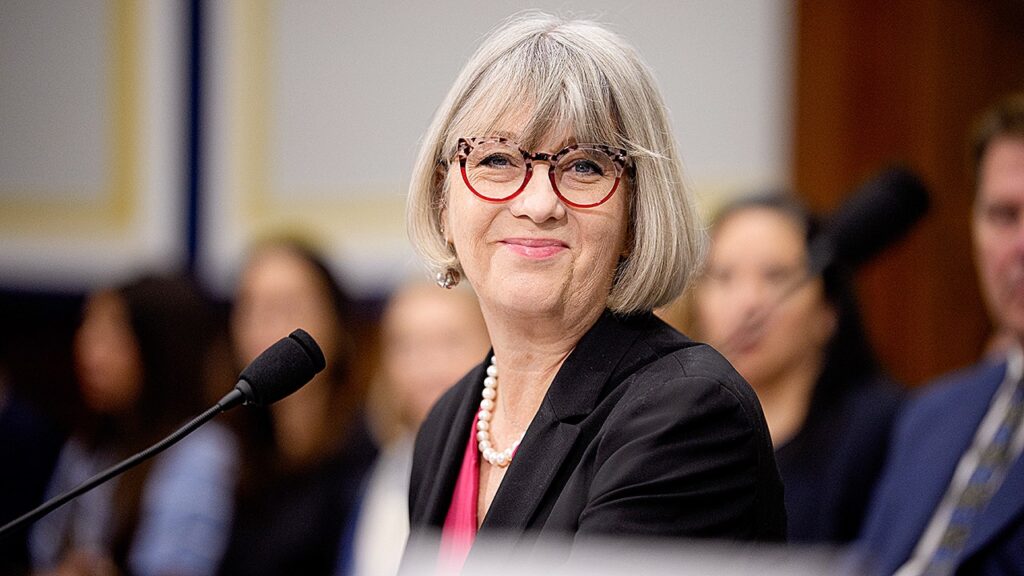
A newly surfaced video of National Museum of American History Director Anthea Hartig has reignited controversy surrounding the Smithsonian’s approach to American history, days after she testified before Congress on the institution’s commitment to scholarly objectivity. In remarks delivered to University of California, Los Angeles students in February 2025, Hartig characterized “history as a practice” as “a prime tool of social justice,” a characterization that contrasts sharply with her Capitol Hill statements from July.
During her congressional testimony last month, Hartig emphasized that the museum’s work adheres to “standards of scholarship, accuracy, independence and nonpartisanship” and insisted the institution “does not take sides in America’s political debates.” She stated the museum’s role was to preserve American life’s breadth and allow the public to “draw their own conclusions” about the past.
The UCLA presentation, however, painted a different institutional vision. Hartig described the museum’s evolving approach as “equity-based, justice forward, community driven and necessarily humble,” and emphasized the institution’s focus on addressing what she termed “the United States’ long and violent racial history.” She advocated for “restorative justice through history” and discussed reparations as extending beyond acknowledgement of wrongdoing.
Hartig highlighted the museum’s collaboration with Black Lives Matter beginning in 2012, which she said aimed to “document and preserve and share objects focused on Black Lives Matter to show the history of the movement.” She also praised Tsuru for Solidarity, an anti-immigration enforcement organization, as a “truly remarkable group” working with the Black Lives Matter movement.
The presentation opened with a land acknowledgement and images from 2020 Black Lives Matter protests in Washington, D.C., including photographs of protest signs. Hartig characterized these signs as “phenomenal, ephemeral statements” expressing “heartfelt and incredibly poignant” messages about American identity and social change.
Beyond activism documentation, Hartig outlined a “proactive multilingual strategy” implemented since fall 2019, requiring all exhibitions, signage, and digital projects to appear in at least English and Spanish, with additional languages included based on community origin. She framed language access as advancing “language justice” and ensuring people could “communicate in the language in which they feel most comfortable.”
Hartig concluded her remarks by asserting the museum faced criticism “for speaking complicated truths” and urged students to amplify such voices collectively. She described history as “the key that unlocks the mysteries of humanity” and characterized museum professionals as “tellers of stories and seekers of truths, hopefully embracers of nuance, ambassadors of empathy and defenders of inalienable rights.”

More Stories
Colombia backs Trump security push while limiting U.S. role in anti-gang operations
Trump Threatens FCC Action Against NBC’s Welker Over Endorsement Coverage
Chicago Mayor Issues Executive Order Requiring Contractor Diversity Disclosures and ICE Ties Reporting