

💛 A quick favor, if you've got a second.
We're really happy that you chose to read one of our stories and sincerely hope you'll stick around to read more. We took our paywall down — for now — but that won't last forever, and when the gate goes back up, we'd love for you to already be on the inside.
It's free. So please enter your email here and don't forget to like and follow us on all of your favorite Social Media platforms!
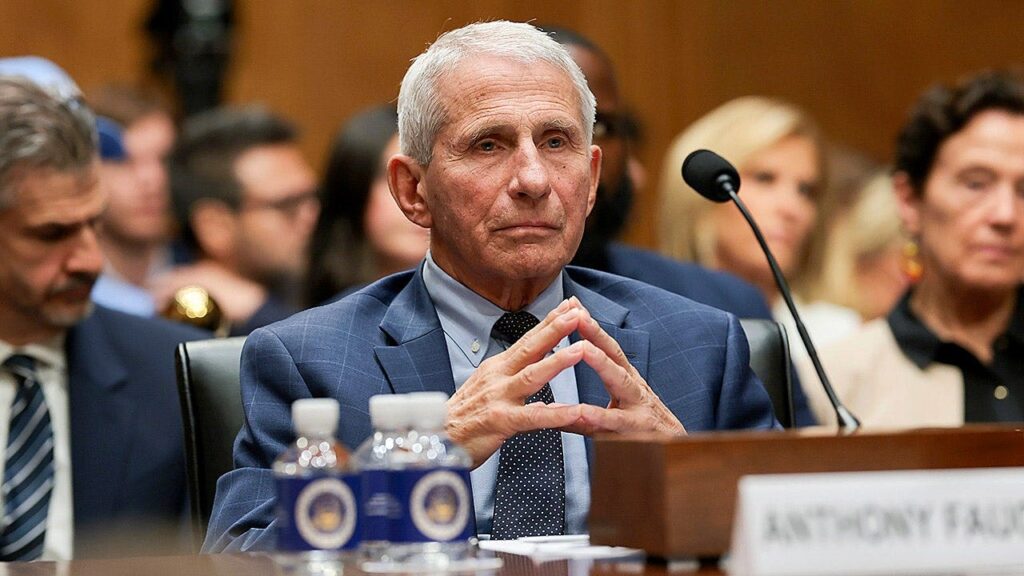
Dr. Anthony Fauci’s appearance before the Senate Homeland Security Committee resulted in his repeated invocation of the Fifth Amendment Self-Incrimination Clause, citing the constitutional protection 111 times rather than answering questions from lawmakers. Following an opening statement in which he accused Committee Chair Sen. Rand Paul of harboring an “unhinged obsession” with him, Fauci declined to provide testimony on numerous matters. Legal experts remain divided on whether his constitutional claim was properly invoked under applicable law.
Several circumstances suggest Fauci’s Fifth Amendment invocation may lack legal merit, starting with his pardon. Before leaving office, President Joe Biden issued a blanket pardon covering any federal crimes Fauci might have committed between January 1, 2014, and January 19, 2025, relating to his roles as director of the National Institute of Allergy and Infectious Diseases, member of the White House Coronavirus Task Force, and Chief Medical Advisor to the President. Additionally, Fauci retired in 2022, which likely places most potential state crimes outside applicable statutes of limitations.
The Fifth Amendment protects witnesses only against genuine criminal exposure, not remote or speculative risks, according to Supreme Court precedent established in Hoffman v. United States. Witnesses cannot invoke the protection merely to avoid embarrassment or public scrutiny, nor can they claim the privilege simply to escape potential perjury charges for truthful testimony. Prior to the hearing, Sen. Paul released over 1,000 pages of Fauci’s diary entries, some suggesting he questioned publicly stated positions on the virus’s origin and pandemic prevention measures.
Arguments favoring Fauci’s position exist as well. President Trump and Republican lawmakers contend that Biden’s final pardons, including Fauci’s, may be invalid if White House staff used an auto-pen signature without Biden’s direct knowledge or approval. Furthermore, several state attorneys general have announced investigations into potential state crimes related to Fauci’s government service, possibly including perjury charges stemming from deposition testimony in COVID-related litigation. These ongoing legal threats could justify Fauci’s assertion of Fifth Amendment protection.
Congress possesses multiple remedies in response to Fauci’s refusal to testify. The most likely path involves voting to hold him in contempt of Congress, requiring majority approval from the committee and full Senate, with referral to the U.S. Attorney for the District of Columbia for potential prosecution. A judge would then determine whether Fauci’s Fifth Amendment invocation was proper using standards established in Ellis v. United States.
Alternative approaches include granting Fauci use and derivative use immunity, compelling his testimony while protecting him from prosecution if evidence derives from his compelled statements. Congress could also vote for transactional immunity, preventing prosecution for any conduct he testifies about, though perjury charges would remain available if he provided false statements. Legal observers expect additional developments before the matter concludes.

More Stories
Federal voting arrest in New Jersey adds new pressure point in Sherrill-Trump standoff
Colombia backs Trump security push while limiting U.S. role in anti-gang operations
Former NFL cheerleader and ex-aide face off in close Rhode Island GOP primary