
💛 A quick favor, if you've got a second.
We're really happy that you chose to read one of our stories and sincerely hope you'll stick around to read more. We took our paywall down — for now — but that won't last forever, and when the gate goes back up, we'd love for you to already be on the inside.
It's free. So please enter your email here and don't forget to like and follow us on all of your favorite Social Media platforms!
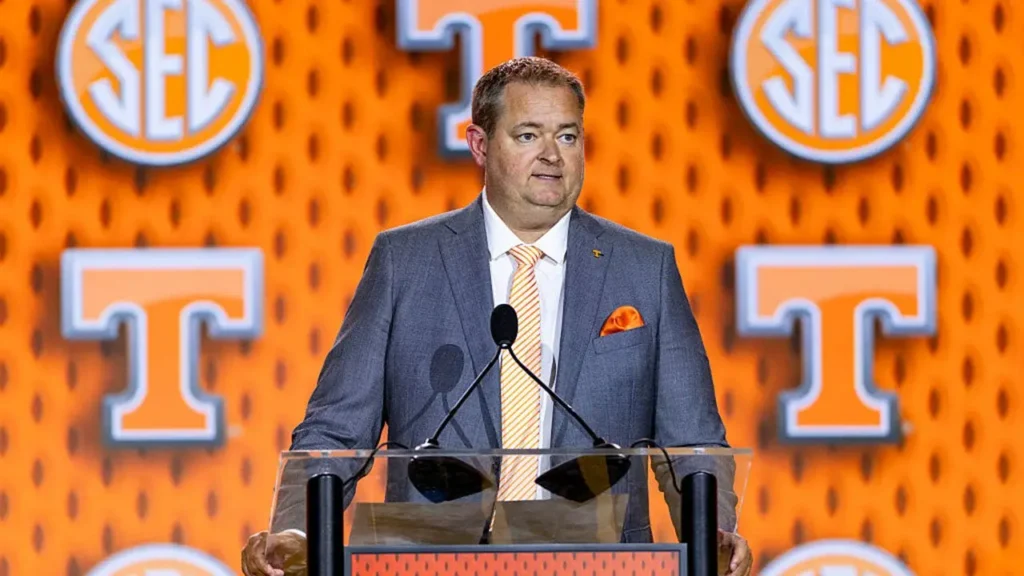
Tennessee head coach Josh Heupel launched a sharp critique of NCAA enforcement on Tuesday, condemning the organization’s decision to suspend star linebacker Arion Carter for the opening two games of the 2026 season. Heupel characterized the ruling as fundamentally disconnected from the realities of modern college sports, where athletes routinely earn millions through name, image and likeness deals while facing outdated restrictions on agent contact.
Carter declared for the NFL Draft in January and hired a professional agent to begin draft preparation. The agent provided Carter with a $427 plane ticket to attend a training session, where the linebacker discovered a foot injury requiring surgery. Facing the prospect of a significantly diminished draft position due to the injury, Carter elected to return to college football within weeks and repaid the full amount of the airline ticket.
The NCAA ruled that Carter violated longstanding regulations prohibiting student-athletes from signing with agents pursuing draft opportunities. The organization stated in its response that “student-athletes knowingly violated those longstanding rules” and that schools must work with the national office to establish reinstatement requirements, which may include financial repayment or competition withholding.
Heupel argued the penalty reflects a glaring contradiction in college athletics governance. “The ruling that came out from the NCAA of a 2-game suspension I truly believe is bullshit,” the coach said. “You look at the landscape of college football, the rules of NIL and everything, I think the ruling is completely outdated.”
The coach emphasized Carter’s transparency throughout the process, noting the linebacker made the appropriate choice for his health and handled all communications honestly with university officials. Carter self-reported the violation and complied fully with NCAA inquiries, yet still faces suspension during Tennessee’s contests against Georgia Tech and other early-season matchups.
Heupel suggested the NCAA faces broader accountability questions as schools circumvent revenue-share caps through agent involvement while high school recruits negotiate agreements featuring private air travel for families. The contradiction underscores what critics view as selective enforcement of rules that no longer align with college sports’ commercial realities.

More Stories
Federal voting arrest in New Jersey adds new pressure point in Sherrill-Trump standoff
Indiana coach Curt Cignetti tells restless Hoosiers fans not to gripe over 38-0 win
Colombia backs Trump security push while limiting U.S. role in anti-gang operations