
💛 A quick favor, if you've got a second.
We're really happy that you chose to read one of our stories and sincerely hope you'll stick around to read more. We took our paywall down — for now — but that won't last forever, and when the gate goes back up, we'd love for you to already be on the inside.
It's free. So please enter your email here and don't forget to like and follow us on all of your favorite Social Media platforms!
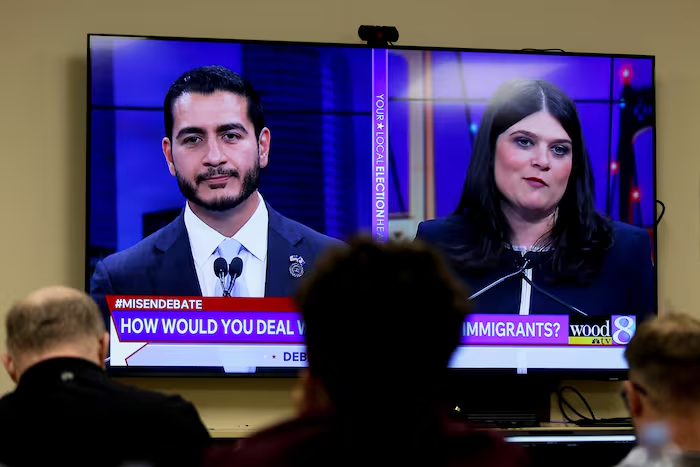
Michigan’s Democratic primary on August 4 will provide a critical snapshot of the party’s ideological trajectory as voters choose between Abdul El-Sayed, endorsed by Senator Bernie Sanders, and four-term Representative Haley Stevens, backed by Senate Democratic leader Chuck Schumer. The race carries particular significance given Michigan’s status as a battleground state in presidential contests, making the outcome indicative of broader Democratic strategies heading into the general election.
The winner must reconcile a fractured party base to challenge Republican Mike Rogers, a former congressman, in November. Democrats face mounting pressure to retain the seat vacated by retiring Senator Gary Peters, as control of the chamber depends on success in competitive races like this one.
The contentious campaign has been shaped significantly by American Israel Public Affairs Committee spending and affiliated groups channeling nearly $30 million to support Stevens. This financial intervention has ignited fierce debate within Democratic ranks, particularly in Michigan, home to the nation’s largest Arab American population, where Gaza war policy has become a divisive issue among party voters.
El-Sayed has framed the contest as a test of whether grassroots organizing can overcome substantial outside spending. The dynamic mirrors 2024 activism that pressured current Senator Elissa Slotkin to take firmer positions on Israel’s military operations in Gaza before narrowly defeating Rogers by under 20,000 votes.
Republican gubernatorial voters will decide between Trump-endorsed Representative John James and self-funded businessman Perry Johnson, who has loaned his campaign exceeding $30 million. On the Democratic side, Secretary of State Jocelyn Benson faces Genesee County Sheriff Chris Swanson.
Virginia Democrats attempt to compensate for a state supreme court decision invalidating a voter-approved redistricting referendum that would have created four additional Democratic-leaning House seats. Strategists view primaries in three districts as crucial for selecting nominees capable of flipping Republican-held seats in the fall.
Elaine Luria, a former naval commander seeking her Virginia Beach swing seat lost in 2022, competes in a crowded Democratic primary. Former Representative Tom Perriello pursues his central Virginia district in the state’s 5th congressional district, which has shifted rightward since his earlier tenure following Barack Obama’s 2008 election.
In Missouri’s safely Democratic St. Louis-area House seat, prosecutor Wesley Bell faces a rematch against progressive firebrand Representative Cori Bush two years after narrowly ousting her in their previous primary contest. Bush’s return campaign emphasizes retribution against AIPAC for its targeting efforts in the earlier race.

More Stories
Former NFL cheerleader and ex-aide face off in close Rhode Island GOP primary
Chicago Mayor Issues Executive Order Requiring Contractor Diversity Disclosures and ICE Ties Reporting
University of Pennsylvania Climate Scientist Demands Supreme Court Packing Pledge From Democratic Candidates