



💛 A quick favor, if you've got a second.
We're really happy that you chose to read one of our stories and sincerely hope you'll stick around to read more. We took our paywall down — for now — but that won't last forever, and when the gate goes back up, we'd love for you to already be on the inside.
It's free. So please enter your email here and don't forget to like and follow us on all of your favorite Social Media platforms!
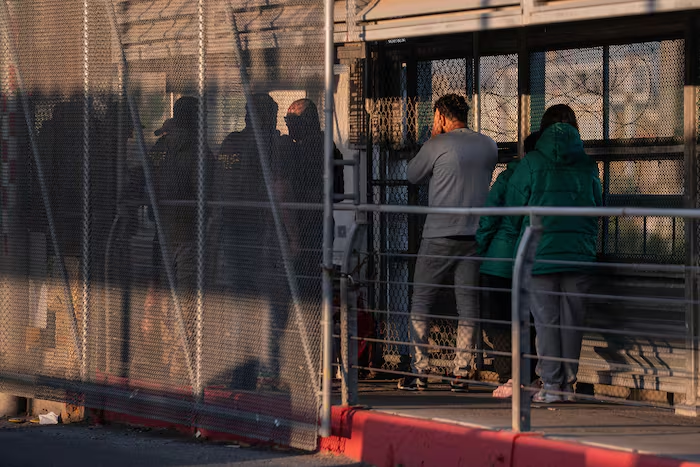
The Trump administration’s effort to mandate detention for all immigrants held within U.S. borders faces a significant legal hurdle after a federal appeals court rejected the policy Thursday. The 9th U.S. Circuit Court of Appeals, based in San Francisco, issued a 2-1 decision finding that immigrants in detention must be afforded the opportunity to request bond hearings, directly contradicting administration directives.
The ruling deepens an existing divide among the nation’s federal appeals courts on this contentious issue. Four circuit courts have now rejected the mandatory detention expansion, while the Fifth Circuit in New Orleans and Eighth Circuit in St. Louis have upheld the policy, setting the stage for potential Supreme Court involvement.
The administration implemented the expanded detention directive last July as part of a sweeping mass deportation campaign. Previously, noncitizens arrested within the country who lacked criminal records were typically granted bond hearings while immigration proceedings unfolded, with mandatory detention reserved for those apprehended at the border.
Writing for the majority, Judge Daniel Bress, a Trump appointee, determined that the historical interpretation of the statute outweighed the administration’s reading of 1996 congressional amendments. Judge M. Margaret McKeown, appointed by President Bill Clinton, joined Bress, while Judge Carlos Bea, a George W. Bush appointee, dissented.
The Department of Homeland Security did not immediately respond to requests for comment on the decision. The expanding disagreement between appeals courts increases the possibility that the U.S. Supreme Court will ultimately resolve the question of whether mandatory detention applies beyond border enforcement.


More Stories
Former NFL cheerleader and ex-aide face off in close Rhode Island GOP primary
Trump Threatens FCC Action Against NBC’s Welker Over Endorsement Coverage
Chicago Mayor Issues Executive Order Requiring Contractor Diversity Disclosures and ICE Ties Reporting