


💛 A quick favor, if you've got a second.
We're really happy that you chose to read one of our stories and sincerely hope you'll stick around to read more. We took our paywall down — for now — but that won't last forever, and when the gate goes back up, we'd love for you to already be on the inside.
It's free. So please enter your email here and don't forget to like and follow us on all of your favorite Social Media platforms!
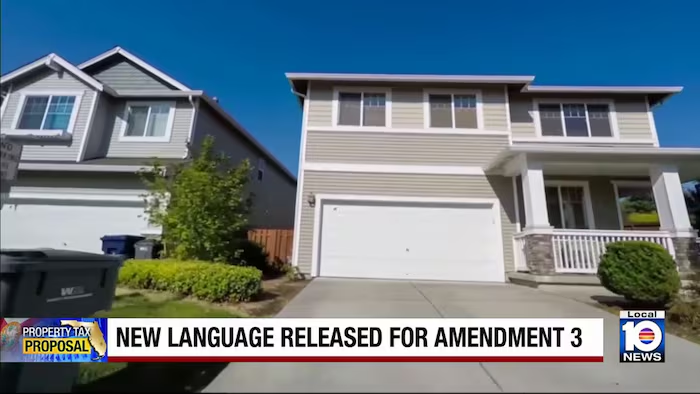
Florida Attorney General James Uthmeier unveiled a revised ballot summary Thursday for Amendment 3, acting on a Leon County Circuit Court order issued 10 days earlier. Judge David Frank had determined the original title and summary contained bias, inaccuracy and misleading language unsuitable for voter consideration.
The new ballot language, “Increased Homestead Exemption; Lower Cap on Increases in Non-Homestead Property Assessments,” replaces the previous title “Save Our Homes From Excessive Property Taxes,” which the judge characterized as a political catchphrase rather than an objective description. The revision strips aspirational claims, removing references to how the amendment would “benefit” taxpayers, “protect small businesses,” “ensure” core services or guarantee “fairness.”
Instead, the rewritten summary details specific policy mechanics. The amendment would elevate the homestead exemption for non-school taxes to $150,000 beginning in 2027, then to $250,000 in 2028, with subsequent inflation adjustments. The original wording referenced only the $250,000 figure despite its delayed implementation, creating a factual gap.
The revised language clarifies that lawmakers would establish a framework allowing municipalities to increase exemptions further, potentially to full assessed value, rather than mandating an automatic schedule. Additionally, the annual assessment-growth cap for non-homestead properties—including rentals, vacation homes and commercial real estate—would decline from 10% to 5%, applying broadly rather than solely to small enterprises.
Former Republican state Senator Jeff Brandes, a plaintiff in one consolidated legal challenge, expressed approval of the changes. “Finally, the practicing attorneys took control of the language,” Brandes stated, noting the revised text honestly reflects the amendment’s actual effects.
Critics maintained that clearer wording does not address substantive policy concerns. State fiscal analysts project the measure would eventually reduce local property-tax revenue by approximately $12 billion annually, potentially necessitating service reductions or alternative revenue sources. Sadaf Knight, CEO of the Florida Policy Institute, acknowledged the revised language better represents actual policy but said underlying harms persist.
The amendment requires 60% voter support to advance in November. Governor Ron DeSantis, who championed the proposal, contends homeowners face unsustainable property-tax increases and that local governments possess sufficient spending flexibility. If voters approve, implementation begins January 1, 2027.

More Stories
Former NFL cheerleader and ex-aide face off in close Rhode Island GOP primary
University of Pennsylvania Climate Scientist Demands Supreme Court Packing Pledge From Democratic Candidates
Democratic Candidate Pia Dandiya Discusses House Race in District 22