

💛 A quick favor, if you've got a second.
We're really happy that you chose to read one of our stories and sincerely hope you'll stick around to read more. We took our paywall down — for now — but that won't last forever, and when the gate goes back up, we'd love for you to already be on the inside.
It's free. So please enter your email here and don't forget to like and follow us on all of your favorite Social Media platforms!
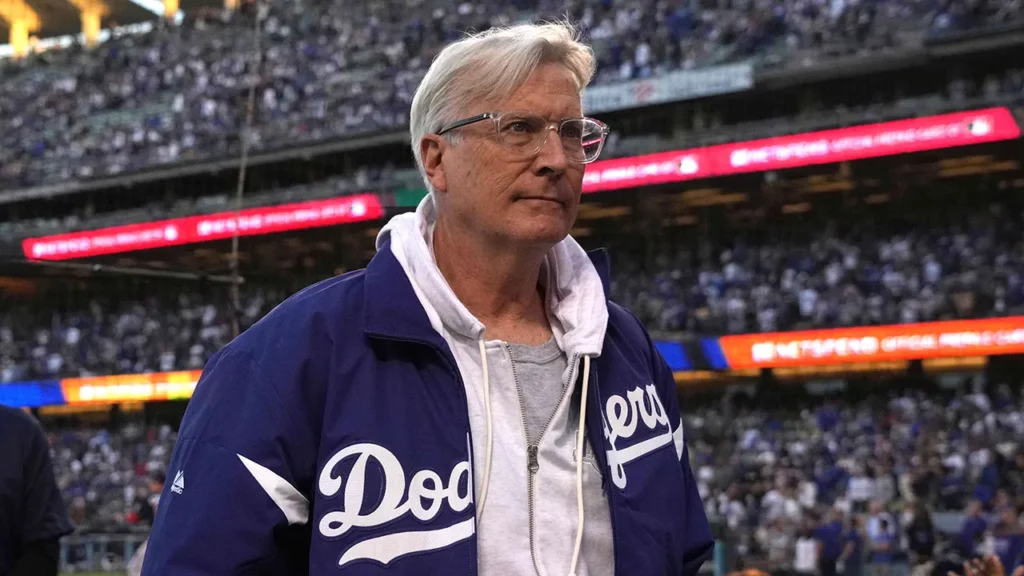
The sports landscape shifted dramatically this week when the Los Angeles Lakers changed hands for $12 billion, with former Disney CEO Bob Iger leading the new ownership group. The transaction sent shockwaves through professional sports because the departing owner, Mark Walter, is a titan in both finance and athletics—a position that now raises complex questions about his other major holdings.
Walter chairs Guggenheim Partners, a $350 billion financial services enterprise, and maintains controlling ownership of the Los Angeles Dodgers. The club has captured back-to-back World Series championships and emerged as a dominant force in Major League Baseball, largely fueled by Walter’s substantial financial resources and investment philosophy that prioritizes winning over short-term profits.
Timing magnifies the intrigue surrounding Walter’s Lakers exit. Federal investigators are examining allegations of loan fraud against the billionaire, a situation that could require substantial liquid assets to resolve—even for someone of Walter’s considerable wealth. This has sparked immediate conjecture that the Lakers sale might represent a necessary first step toward freeing capital for legal expenses.
Speculation has expanded rapidly to encompass an even more consequential possibility: a sale of the Dodgers themselves. Guggenheim acquired the franchise in 2012 for $2 billion, a figure that seemed extraordinary at the time. Current valuations place the Dodgers at approximately $8 billion, following the San Diego Padres’ recent $3.9 billion sale and the Yankees’ $2.6 billion in private equity financing.
Yet team leadership has moved decisively to quell such rumors. Stan Kasten, the Dodgers’ president, told media outlets Wednesday that the Lakers transaction represents an isolated event unrelated to baseball operations. “This is a Laker story, not really a Dodger story,” Kasten stated, emphasizing that no organizational changes are planned or under consideration.
The situation takes on added complexity through an unusual contractual provision involving megastar Shohei Ohtani. When Ohtani signed his 10-year deal with the Dodgers in December 2023, his contract included a “key man” clause permitting him to exit if either baseball operations president Andrew Friedman or Mark Walter departed the organization. The Athletic reported Thursday that Ohtani currently has no intention of exercising this option should Walter sell the team.
Ohtani’s loyalty may stem from the Dodgers’ demonstrated championship prowess and financial commitment to assembling elite rosters. However, questions linger about whether a new ownership structure would maintain Walter’s spending philosophy that has transformed the franchise into a consistent contender and revenue powerhouse.
Walter’s other sporting assets—Chelsea FC, the LA Sparks, and an interest in Cadillac’s Formula 1 program—could theoretically be liquidated to raise capital, though none would generate proceeds comparable to a Dodgers sale. Despite universal denials that the team faces any immediate sale pressure, the Lakers deal’s unexpected speed has left observers skeptical of such assurances.

More Stories
Packers Running Back Josh Jacobs Placed on NFL Commissioner’s Exempt List Following Domestic Arrest
Looney Tunes’ ‘Coyote vs. Acme’ Debuts With $15.5 Million as ‘Spider-Man’ Holds Box Office Crown
Trump Calls NASA to Congratulate Agency on Roman Space Telescope Launch