

💛 A quick favor, if you've got a second.
We're really happy that you chose to read one of our stories and sincerely hope you'll stick around to read more. We took our paywall down — for now — but that won't last forever, and when the gate goes back up, we'd love for you to already be on the inside.
It's free. So please enter your email here and don't forget to like and follow us on all of your favorite Social Media platforms!
The leadership void atop the National Indian Gaming Commission has created operational gridlock for the $46 billion tribal gambling sector, which generated record revenue last year nearly triple that of Nevada casinos. Without a seated chairperson, the federal agency responsible for overseeing 545 gambling facilities across 29 states cannot enforce violations, approve management contracts or certify new tribal gaming laws. The position has remained vacant since January when the previous chairperson stepped down, with President Donald Trump not yet submitting a nomination to fill it.
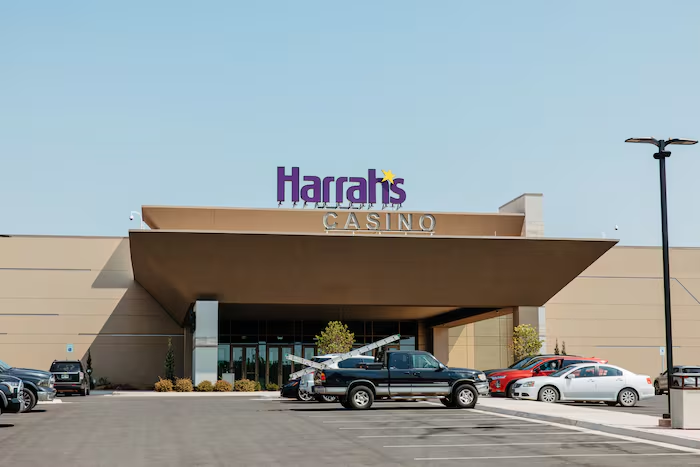
The Iowa Tribe of Oklahoma’s newly opened Harrah’s-branded casino in Chandler exemplifies the disruption caused by the commission’s partial paralysis. The tribe negotiated with Harrah’s parent company to assume daily operations at the 175,000-square-foot facility, but the arrangement stalled pending federal approval. Instead, the Iowa Tribe’s limited government staff now manages the casino while juggling budget preparation and social program oversight—a burden tribal leadership had hoped to avoid through the outsourcing agreement.
Under federal law, the commission’s enforcement authority rests exclusively with its chairperson. Industry experts warn that the inability to cite casinos for violations or mandate emergency closures of unsafe facilities creates dangerous gaps in regulatory oversight. The commission’s final enforcement action was issued on January 12, the same day the acting chairperson’s term expired, leaving months of potential violations unaddressed.
Steven Light, a tribal gambling law expert at the University of Nevada, Las Vegas, cautioned that regulatory uncertainty could deter investment and stall economic development. “Markets function best when there’s stability and certainty around processes and rules,” Light said. Former commissioners emphasized that the chairperson traditionally serves as the tribal gambling industry’s primary advocate in Washington, a role that remains unfilled during a critical policy moment.
Online prediction market platforms such as Kalshi and Polymarket now pose an emerging threat to tribal gaming sovereignty and revenue. At least eight tribes have filed lawsuits alleging the platforms accept wagers from tribal lands and states where tribes hold exclusive gambling rights, potentially violating the Indian Gaming Regulatory Act. Tribal leaders contend that every dollar from gaming funds healthcare, education and housing for Native communities.
The Trump administration’s recent appointment of Billy Kirkland, a Navajo Nation citizen and Assistant Secretary for Indian Affairs, to the commission has raised concerns about executive branch influence over an agency designed for independence. Former commission officials questioned whether Trump’s known support for prediction market platforms explains the delayed chairperson nomination. A White House spokesperson described the commission as “valued” but provided no timeline for filling the vacancy.

More Stories
Colombia backs Trump security push while limiting U.S. role in anti-gang operations
Chicago Mayor Issues Executive Order Requiring Contractor Diversity Disclosures and ICE Ties Reporting
University of Pennsylvania Climate Scientist Demands Supreme Court Packing Pledge From Democratic Candidates