




💛 A quick favor, if you've got a second.
We're really happy that you chose to read one of our stories and sincerely hope you'll stick around to read more. We took our paywall down — for now — but that won't last forever, and when the gate goes back up, we'd love for you to already be on the inside.
It's free. So please enter your email here and don't forget to like and follow us on all of your favorite Social Media platforms!
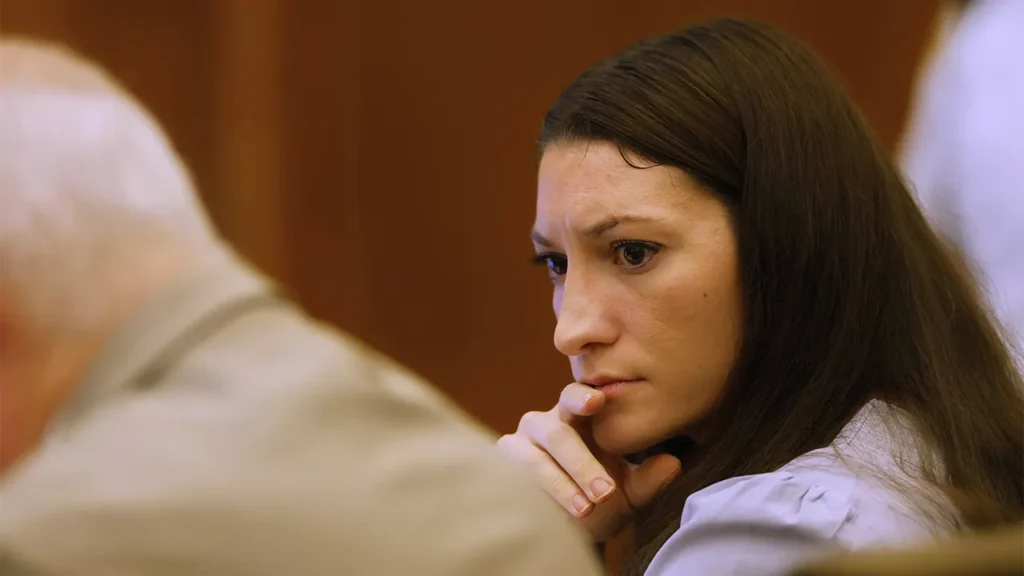
Lindsay Clancy appeared in court Tuesday and formally consented to allow prosecutors to establish certain forensic evidence without requiring testimony from numerous witnesses. Judge William Sullivan confirmed that Clancy understood the stipulation and had agreed to it voluntarily, knowingly, and intelligently. The agreement does not constitute a guilty plea or an acknowledgment of criminal responsibility for the deaths of her three children.
Defense attorney Kevin Reddington explained that the stipulation would eliminate the need for prosecutors to call multiple witnesses solely to demonstrate the chain of custody for blood samples, bodily fluids, exercise bands, and DNA evidence. The strategic move allows the defense to redirect jurors’ attention from repetitive forensic testimony toward the critical question of Clancy’s mental state at the time of the deaths on January 24, 2023.
Testimony from Massachusetts State Police Trooper Jonathan O’Loughlin revealed that investigators recovered no usable fingerprints from a knife or three exercise bands found at the family’s Duxbury home. O’Loughlin noted that the knife contained a friction-ridge impression insufficient for identification, while the yellow, black, and blue exercise bands similarly yielded no prints suitable for comparison.
Margaret McLean, a former prosecutor and law professor at Boston College’s Carroll School of Management, noted that Clancy’s composed demeanor in court Tuesday should not be interpreted as evidence of her mental condition during the crimes. McLean emphasized that the commonwealth must prove Clancy was mentally sound beyond a reasonable doubt at the time of the offenses, not at the present trial proceedings.
The absence of identifiable fingerprints could prompt jurors to speculate about whether gloves were used or surfaces were deliberately wiped, McLean said, potentially suggesting premeditation. However, she explained that the defense can argue jurors must base conclusions only on evidence presented, not on conjecture about items not introduced at trial.



More Stories
Federal voting arrest in New Jersey adds new pressure point in Sherrill-Trump standoff
Packers Running Back Josh Jacobs Placed on NFL Commissioner’s Exempt List Following Domestic Arrest
Federal Prosecutors Convene Special Grand Jury to Investigate D.C. Schools’ Attendance and Graduation Practices