


💛 A quick favor, if you've got a second.
We're really happy that you chose to read one of our stories and sincerely hope you'll stick around to read more. We took our paywall down — for now — but that won't last forever, and when the gate goes back up, we'd love for you to already be on the inside.
It's free. So please enter your email here and don't forget to like and follow us on all of your favorite Social Media platforms!
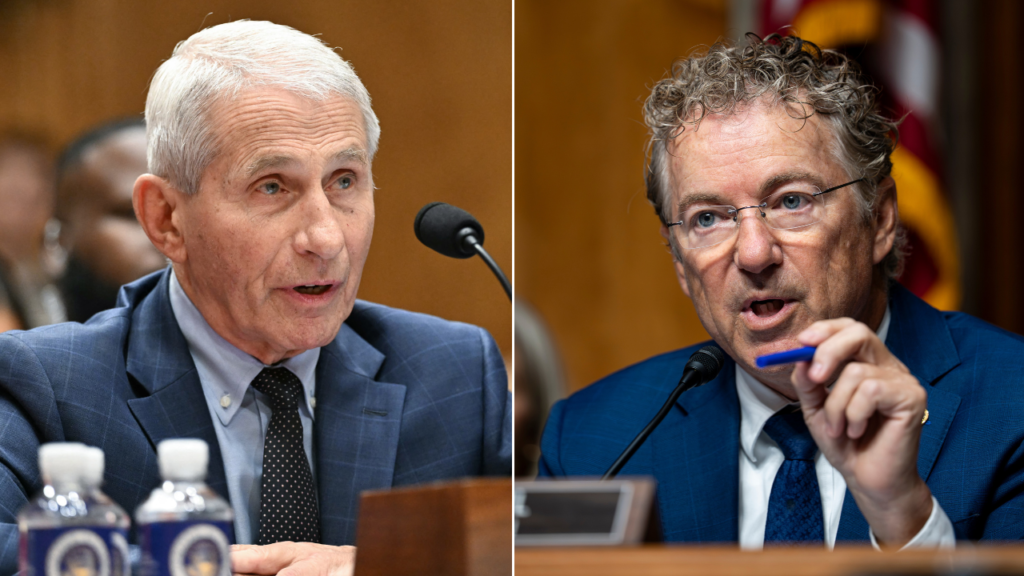
Dr. Anthony Fauci, who led the National Institute of Allergy and Infectious Diseases for 38 years, declined to answer questions at a Senate hearing this week by repeatedly invoking his Fifth Amendment right against self-incrimination. The former health official cited the constitutional protection 111 times while under subpoena before the Senate Homeland Security and Governmental Affairs Committee, chaired by Sen. Rand Paul, R-Ky.
Paul has signaled his intention to pursue contempt of Congress charges against Fauci, warning that “there will be repercussions to your refusal to testify today.” The Kentucky Republican stated the committee would consider appropriate action for the official’s failure to respond to inquiries, characterizing the conduct as obstruction of a congressional investigation. Paul plans to send a criminal referral directly to the Department of Justice, bypassing the standard Senate resolution process.
Fauci delivered an opening statement before falling silent for the remainder of the three-hour hearing. In his prepared remarks, he suggested Paul’s investigation was designed to elicit statements that could vindicate the senator’s public calls for criminal prosecution. Committee Republicans, including Sen. Josh Hawley, R-Mo., posed deliberately mundane questions about the day of the week and the color of Fauci’s necktie, arguing that answering such benign inquiries would waive his Fifth Amendment protections on substantive matters.
Legal precedent offers competing interpretations of Fauci’s conduct. The 1896 Supreme Court case Brown v. Walker established that witnesses granted immunity may still be compelled to testify despite potential embarrassment. However, the 2014 case of IRS official Lois Lerner provides a contrary example: after invoking the Fifth following an opening statement, the Obama-era Justice Department declined to prosecute her for contempt of Congress, establishing potential precedent for Fauci’s situation.
Whether the Trump Justice Department will prosecute Fauci depends partly on political dynamics. Contempt referrals are more frequently pursued in the House, which requires only a simple majority, than in the Senate, where citations must clear a 60-vote filibuster threshold. Paul indicated he would circumvent this procedural hurdle by directly submitting his legal arguments to DOJ prosecutors for their consideration.
Fauci received a presidential pardon from former President Joe Biden before the hearing, which Republicans argue should have permitted him to testify freely. Democrats countered that the pardon may not shield him from new criminal jeopardy, justifying his Fifth Amendment strategy. The ultimate resolution may require federal courts to rule on whether Fauci’s invocation was legally justified—a determination that could hinge on the scope and effect of Biden’s pardon.

More Stories
Christa Pike Survives Botched Double Execution Attempt; Tennessee Halts Remaining 2026 Executions
Tennessee’s Lone Death Row Female is Scheduled for Execution Wednesday for 1995 Torture/Murder
Federal voting arrest in New Jersey adds new pressure point in Sherrill-Trump standoff