



💛 A quick favor, if you've got a second.
We're really happy that you chose to read one of our stories and sincerely hope you'll stick around to read more. We took our paywall down — for now — but that won't last forever, and when the gate goes back up, we'd love for you to already be on the inside.
It's free. So please enter your email here and don't forget to like and follow us on all of your favorite Social Media platforms!
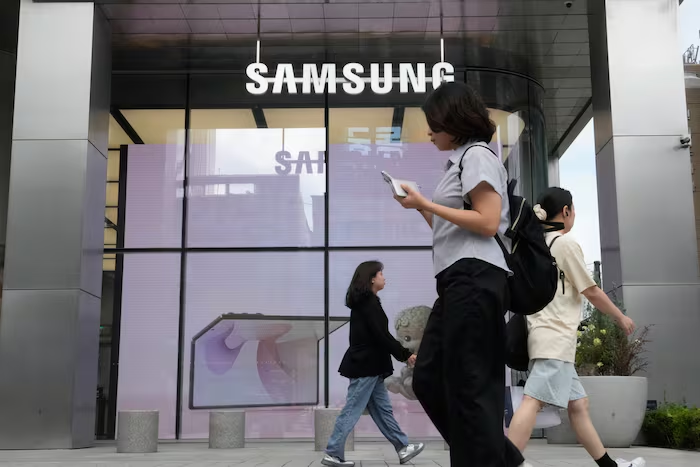
Samsung Electronics announced a record operating profit of 89.5 trillion won ($62 billion) for the second quarter on Thursday, capitalizing on global demand for artificial intelligence infrastructure and advanced memory chips. The South Korean technology conglomerate’s results underscore the growing importance of AI-related semiconductor demand, which has lifted the world’s two largest memory chipmakers to unprecedented earnings levels.
The company’s operating profit surged more than 19 times year-over-year, with nearly all gains originating from its semiconductor division. Rising chip prices, driven by insatiable demand for AI server processors and high-bandwidth memory components, offset operating losses in Samsung’s mobile, television, and home appliance segments, which were pressured by elevated component costs.
Samsung’s second-quarter revenue reached 171.5 trillion won ($119 billion), also an all-time record. Management indicated that memory product demand should remain robust through year-end as companies continue deploying AI infrastructure and adopting agentic AI systems, with server chip shortages expected to persist and sustain elevated pricing.
Despite robust financial performance, Samsung’s stock has declined sharply this week amid investor concerns about the company’s substantial capital expenditure plans and mounting competitive threats. SK Hynix, which reported record second-quarter revenue of 60.5 trillion won ($42 billion) a day prior, also experienced share price declines exceeding 9 percent Monday, suggesting market skepticism about returns on massive chip manufacturing investments.
Analyst concerns center on whether Samsung and SK Hynix will generate adequate returns on their major semiconductor facility and data center investments as South Korea pursues artificial intelligence leadership. Growing competition from Chinese chipmakers, particularly reports of a state-owned company mass-producing domestically designed lithography equipment and the successful market debut of ChangXin Memory Technologies, have further pressured South Korean technology stocks.


More Stories
Trump Backs Christian-Led Initiative for Expedited U.S. Entry for Canadian Jews Facing Antisemitism
Looney Tunes’ ‘Coyote vs. Acme’ Debuts With $15.5 Million as ‘Spider-Man’ Holds Box Office Crown
Trump Calls NASA to Congratulate Agency on Roman Space Telescope Launch