

💛 A quick favor, if you've got a second.
We're really happy that you chose to read one of our stories and sincerely hope you'll stick around to read more. We took our paywall down — for now — but that won't last forever, and when the gate goes back up, we'd love for you to already be on the inside.
It's free. So please enter your email here and don't forget to like and follow us on all of your favorite Social Media platforms!
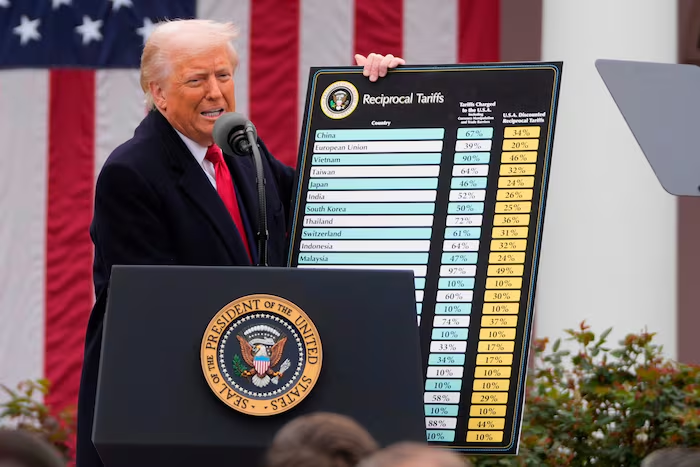
The Trump administration’s decision to impose additional tariffs ranging from 10% to 12.5% on goods from 60 countries sparked immediate backlash Friday from major trading partners who rejected the underlying justification. The new duties, which took effect as temporary levies expired early Friday morning, target nations the administration says have inadequately banned products manufactured through forced labor practices.
Australia’s trade minister Don Farrell characterized the tariffs as “completely unjustified,” challenging the administration’s assertion that the country—a significant exporter of beef, gold and copper—has connections to modern slavery. Farrell stated that Australia takes forced labor concerns seriously and pledged to lobby the U.S. Trade Representative for removal of all tariffs on Australian goods, which now face a 12.5% rate.
New Zealand Prime Minister Christopher Luxon similarly criticized his nation’s 12.5% tariff as “extremely disappointing” and unfounded, noting the underlying U.S. investigation lacked meaningful evidence supporting forced labor allegations. Luxon emphasized that tariffs increase costs and uncertainty for businesses rather than addressing legitimate trade concerns.
The European Union’s foreign policy chief Kaja Kallas questioned the credibility of U.S. labor standards claims, noting that EU member states offer paid vacations and superior working conditions compared to American practices. Japan protested the 12.5% duty, stating the Trump administration had previously assured Tokyo there would be no additional tariffs beyond an earlier 10% agreement.
Trade analysts suggested these duties face lower legal vulnerability than prior tariff rounds. Wendy Cutler, a former senior U.S. trade official, said the moderate rate range and the Trade Representative’s four-month investigation process to satisfy Section 301 requirements of the 1974 Trade Act strengthen the administration’s legal position, though she cautioned that additional tariffs may follow in autumn targeting alleged excess production capacity.
Economists noted the tariffs may prove less economically disruptive than earlier rounds, as the administration excluded numerous product categories and the duties affect a smaller proportion of Asian trade flows. However, the measures will likely contribute to higher prices for consumers and businesses importing inputs and machinery, analysts warned.

More Stories
Colombia backs Trump security push while limiting U.S. role in anti-gang operations
Trump Threatens FCC Action Against NBC’s Welker Over Endorsement Coverage
Federal Prosecutors Convene Special Grand Jury to Investigate D.C. Schools’ Attendance and Graduation Practices