


💛 A quick favor, if you've got a second.
We're really happy that you chose to read one of our stories and sincerely hope you'll stick around to read more. We took our paywall down — for now — but that won't last forever, and when the gate goes back up, we'd love for you to already be on the inside.
It's free. So please enter your email here and don't forget to like and follow us on all of your favorite Social Media platforms!
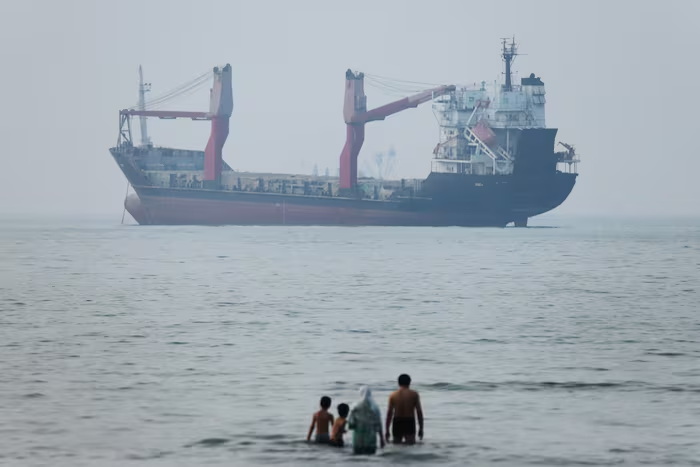
Bahrain sounded emergency sirens Friday morning as residents were ordered to seek shelter following detected incoming fire, occurring hours after the U.S. military concluded its 13th consecutive night of strikes targeting Iranian military positions. The escalating exchange of fire between Washington and Tehran has placed Gulf nations under sustained attack as the two powers compete for dominance over one of the world’s most crucial maritime passages.
Multiple strikes were reported across Iranian territory Thursday, including blasts on Qeshm Island, which houses naval infrastructure and drone-launching capabilities, as well as strikes near Andimeshk, Omidiyeh, and Firuzabad. According to Iranian state media, a U.S. missile strike on the outskirts of Ahvaz killed four people and wounded five others along the Karun River region.
U.S. Central Command characterized the military operations as necessary to “further degrade Iran’s ability to threaten civilian mariners and commercial vessels transiting regional waters.” The strikes concluded shortly before 5 a.m. local time Friday and are part of a broader American effort to maintain control of the Strait of Hormuz, through which approximately one-fifth of the world’s oil and gas supply typically flows during peacetime.
Iran-backed Houthi rebels escalated hostilities by claiming responsibility for attacks on two Saudi oil tankers in the Red Sea on Thursday, signaling a potential widening of the conflict. The group has also threatened to disrupt the Bab el-Mandeb Strait, another critical chokepoint connecting the Red Sea to the Gulf of Aden, through which roughly 12 percent of global trade passes annually.
International oil markets responded sharply to the mounting tensions, with Brent crude jumping more than 6 percent to approximately $100 per barrel—the highest price since May before a preliminary ceasefire agreement collapsed. The disruptions compound existing supply challenges, as Saudi Arabia has already rerouted millions of barrels daily through an overland pipeline to its Yanbu port on the Red Sea to circumvent Persian Gulf blockades.
President Donald Trump threatened “major military punishment” against the Houthis for continued attacks on vessels and stated that sanctioned Iranian assets held by the U.S. government would fund repairs to damaged ships. Trump offered no specific legal framework for accessing the frozen funds but described the measure as “the fair and equitable thing to do.”
Iran’s Foreign Minister Abbas Araghchi rejected Trump’s assertion, warning on social media that normalizing asset confiscation by governments undermines global financial security. Meanwhile, Iraqi Prime Minister Ali al-Zaidi visited Tehran to advocate for diplomatic resolution, pledging that Iraqi territory would not be used for attacks on Iran.

More Stories
Colombia backs Trump security push while limiting U.S. role in anti-gang operations
Chicago Mayor Issues Executive Order Requiring Contractor Diversity Disclosures and ICE Ties Reporting
Federal Prosecutors Convene Special Grand Jury to Investigate D.C. Schools’ Attendance and Graduation Practices