

💛 A quick favor, if you've got a second.
We're really happy that you chose to read one of our stories and sincerely hope you'll stick around to read more. We took our paywall down — for now — but that won't last forever, and when the gate goes back up, we'd love for you to already be on the inside.
It's free. So please enter your email here and don't forget to like and follow us on all of your favorite Social Media platforms!
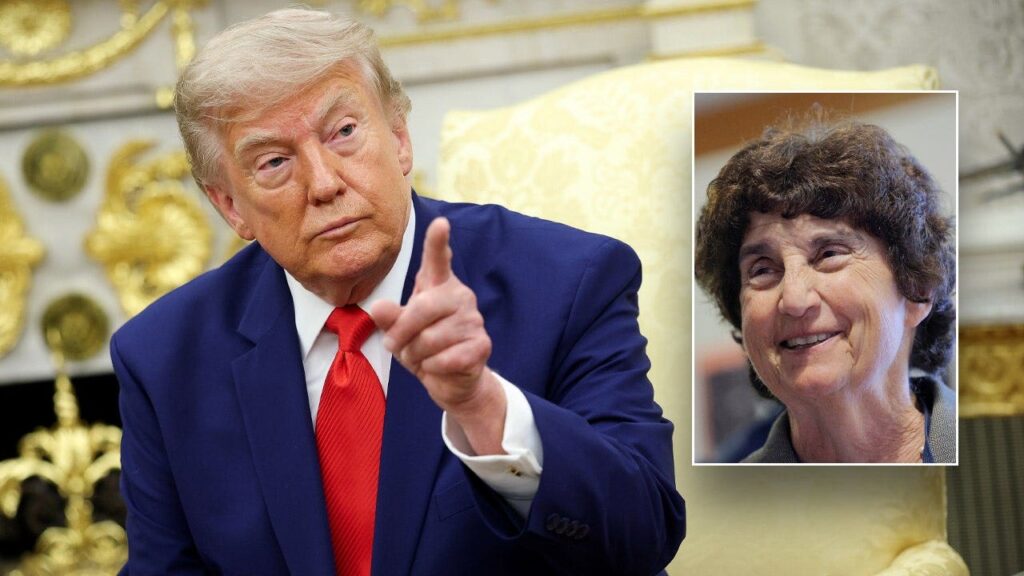
The Trump administration is publicly criticizing U.S. District Judge Patti Saris for issuing a temporary administrative stay that preserves Temporary Protected Status protections for South Sudanese nationals, even as a recent Supreme Court decision substantially limited the power of lower courts to challenge such government actions. Saris granted the stay Thursday in African Communities Together v. Mullin, freezing the administration’s Nov. 6, 2025, decision to end South Sudan’s TPS designation pending further court proceedings on potential constitutional grounds.
Department of Homeland Security General Counsel James Percival condemned the ruling on social media, calling it “open defiance of the Supreme Court, plain and simple.” The order renders the administration’s termination decision “null, void, and of no legal effect” temporarily, though Saris emphasized the measure is procedural and preserves only the current status while she considers whether plaintiffs may amend their lawsuit to pursue remaining constitutional claims.
Legal analysts aligned with the administration argue Saris lacks any authority to act after the Supreme Court’s June decision in Mullin v. Doe, which established that federal courts generally cannot review or block government decisions to end Temporary Protected Status. Hans von Spakovsky, a senior legal fellow at Advancing American Freedom, told Fox News Digital that the judge should dismiss all remaining claims rather than maintain any temporary protections, asserting that “no jurisdiction means no jurisdiction.”
The Supreme Court’s 6-3 ruling in June barred courts from reviewing Administrative Procedure Act challenges to TPS terminations, though it allowed constitutional Equal Protection claims to proceed. Von Spakovsky argued the decision applies equally to South Sudan despite the high court’s case focusing on Syrian and Haitian nationals, and he called for the Supreme Court to overturn Saris’ actions and for judges to face discipline.
African Communities Together and four South Sudanese immigrants filed suit in December 2025, alleging the administration unlawfully terminated South Sudan’s TPS designation without following proper procedures and that the decision was motivated by unconstitutional discrimination. Saris previously ruled in the plaintiffs’ favor twice before the Supreme Court intervened, finding DHS had failed to follow required procedures and offered pretextual justifications for ending the protection.
The judge, nominated by President Bill Clinton in 1993 to the U.S. District Court for the District of Massachusetts, has overseen numerous high-profile immigration disputes involving both Republican and Democratic administrations. The case may proceed to the 1st Circuit Court of Appeals and potentially the Supreme Court again as the judiciary determines whether lower courts retain authority to act following the high court’s recent TPS decision.

More Stories
Federal voting arrest in New Jersey adds new pressure point in Sherrill-Trump standoff
Colombia backs Trump security push while limiting U.S. role in anti-gang operations
Trump Threatens FCC Action Against NBC’s Welker Over Endorsement Coverage