


💛 A quick favor, if you've got a second.
We're really happy that you chose to read one of our stories and sincerely hope you'll stick around to read more. We took our paywall down — for now — but that won't last forever, and when the gate goes back up, we'd love for you to already be on the inside.
It's free. So please enter your email here and don't forget to like and follow us on all of your favorite Social Media platforms!
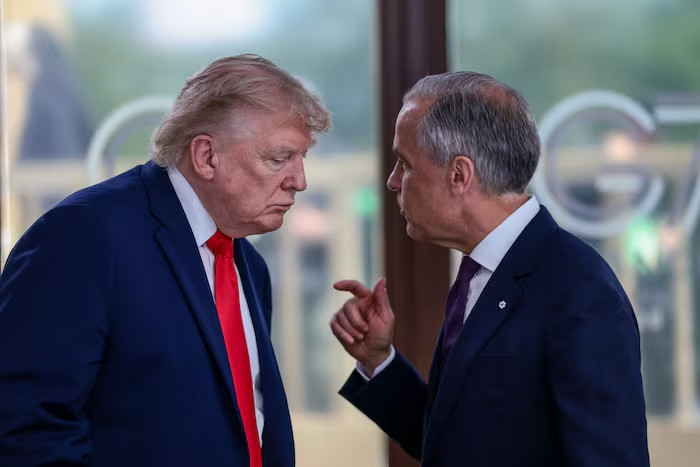
A threatened 50% tariff on Canadian imports announced by U.S. President Donald Trump would ripple across Canada’s economy, though analysts suggest the move may primarily serve as a bargaining tool in ongoing trade discussions. The duties, set to take effect August 19, would apply to products ranging from honey and liquor to hockey sticks and dog leashes while exempting energy, potash, fish and critical minerals. The tariffs would impact goods previously shielded under the 2020 United States-Mexico-Canada Agreement, a pact no longer renewed and now subject to renegotiations that could extend to 2036.
The tariffs would affect roughly $28 billion Canadian in annual exports to the United States—approximately 5% of U.S. annual imports from Canada. Randall Bartlett, deputy chief economist at Desjardins, projected the duties could reduce Canadian economic growth by two to three tenths of a percent in 2026 and 2027, though he does not anticipate a full recession. Still, the uncertainty surrounding implementation could suppress business investment, hiring and consumer spending across the country.
Industry leaders warn of significant consequences for smaller manufacturers employing 10 to 200 workers who form the backbone of regional economies. Dennis Barby, president of Canadian Manufacturers and Exporters, cautioned that tariffs would elevate costs, disrupt production chains and weaken North America’s competitive position globally. Job losses in affected sectors would trigger broader economic contractions as displaced workers reduce spending in their communities.
Canadian provincial leaders expressed frustration over the tariff announcement, particularly given U.S. interest in accessing Canadian mineral resources. Premier David Eby suggested Canada should consider limiting resource exports if the U.S. maintains its confrontational stance on trade while seeking secure access to critical metals.
Experts including Fen Osler Hampson of Carleton University cautioned against aggressive Canadian retaliation, arguing that as the smaller economy, Canada would suffer more in an extended trade dispute. Hampson and Bartlett both noted the tariffs may never materialize, reflecting Trump’s pattern of using such threats as negotiating leverage. Prime Minister Mark Carney said Tuesday that he and Trump have agreed to intensify trade discussions aimed at resolving the dispute.

More Stories
Colombia backs Trump security push while limiting U.S. role in anti-gang operations
Trump Threatens FCC Action Against NBC’s Welker Over Endorsement Coverage
Federal Prosecutors Convene Special Grand Jury to Investigate D.C. Schools’ Attendance and Graduation Practices