

💛 A quick favor, if you've got a second.
We're really happy that you chose to read one of our stories and sincerely hope you'll stick around to read more. We took our paywall down — for now — but that won't last forever, and when the gate goes back up, we'd love for you to already be on the inside.
It's free. So please enter your email here and don't forget to like and follow us on all of your favorite Social Media platforms!
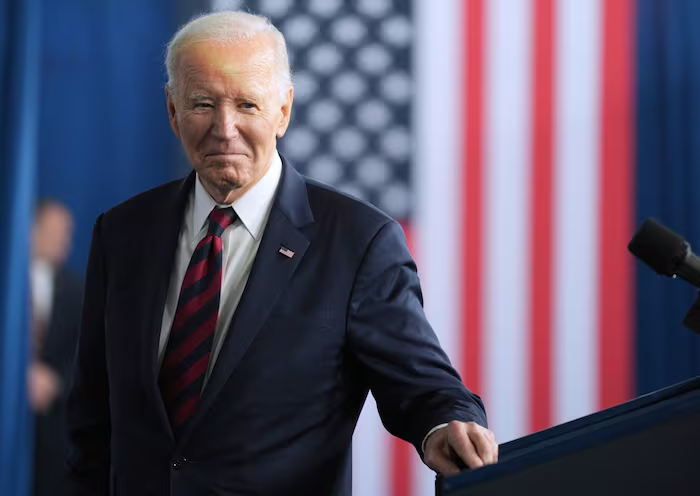
A three-judge panel from the U.S. Court of Appeals for the District of Columbia Circuit has denied President Joe Biden’s attempt to suppress audio recordings and transcripts from interviews with his memoir ghostwriter, ruling that the public interest in disclosure outweighs privacy concerns. The divided 2-1 decision, issued late Monday, grants Biden until August 3 to pursue further legal action before the recordings become available.
Mark Zwonitzer conducted extensive interviews with Biden at his residence during 2016 and 2017 while collaborating on the president’s two memoirs. Biden’s legal team contended the conversations were confidential in nature and never intended for public consumption, characterized by candid personal reflections.
Special counsel Robert Hur obtained the recordings while investigating Biden’s management of classified materials dating from his tenure as a Delaware senator and vice president. Congressional Republicans pressed for access to the materials after Hur opted against filing criminal charges against the then-sitting president.
The majority opinion stated that even with redactions applied to protect personal privacy, “any remaining incursion on personal privacy from disclosure of the now-redacted materials likely does not outweigh the public interest in disclosure.” Judge Florence Pan, a Biden appointee, dissented from the ruling, while Chief Judge Sri Srinivasan and Judge Gregory Katsas comprised the majority.
Biden initiated legal proceedings under the Trump administration’s Justice Department to block congressional and Heritage Foundation access to the materials. This appeal followed a June ruling by U.S. District Judge Dabney Friedrich, a Trump nominee, who similarly concluded that public interest considerations superseded privacy protections.

More Stories
Federal voting arrest in New Jersey adds new pressure point in Sherrill-Trump standoff
Colombia backs Trump security push while limiting U.S. role in anti-gang operations
Former NFL cheerleader and ex-aide face off in close Rhode Island GOP primary