


💛 A quick favor, if you've got a second.
We're really happy that you chose to read one of our stories and sincerely hope you'll stick around to read more. We took our paywall down — for now — but that won't last forever, and when the gate goes back up, we'd love for you to already be on the inside.
It's free. So please enter your email here and don't forget to like and follow us on all of your favorite Social Media platforms!
The Trump administration’s economic record includes several measurable achievements that merit attention from voters and policymakers. Unemployment remains at historically low levels, real wages are climbing, stock valuations have reached new heights, and business investment continues to expand across sectors. Though inflation currently sits above the Federal Reserve’s target, it declined last month and stands at 3.5% overall, with core inflation at 2.6% when excluding volatile food and energy categories.
Income data from the Committee to Unleash Prosperity demonstrates that during the first 16 months of the current Trump administration, real incomes for the lowest-earning 25% of Americans increased by nearly $2,100. This contrasts with income declines experienced by the same demographic during President Joe Biden’s tenure, when inflation averaged 4.95%. Bank of America Institute research further indicates that credit and debit card spending grew 6.3% year-over-year in June, the strongest pace in over four years, with wage and spending gaps narrowing across income brackets.
A significant disconnect exists between economic indicators and public perception. A CNBC survey found that 61% of Americans express pessimism about current economic conditions and future prospects, while a Washington Post-Ipsos poll places the president’s approval rating on economic management at 33%. Media coverage patterns and Republican communication challenges have contributed to this perception gap, according to observers.
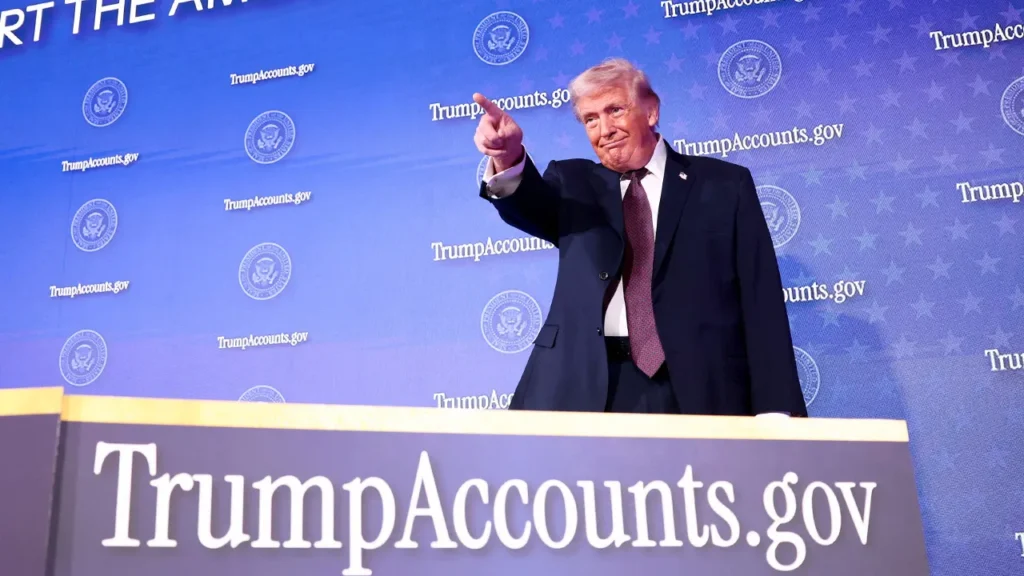
The Trump Accounts initiative has attracted 6 million child enrollees since its introduction, with 1.4 million participants qualifying for $1,000 Treasury contributions. Michael Dell and his wife Susan donated $6.25 billion to support the program. The administration also signed an executive order in April creating a low-cost “TrumpIRA” program, designed to provide retirement account access to the estimated 40% of full-time workers and majority of part-time workers currently lacking employer-sponsored retirement plans.
Republicans face a critical window before midterm elections scheduled for just over three months away. A pending $95 billion reconciliation bill focusing primarily on defense and agriculture represents a narrower legislative approach than some GOP members had anticipated. Proposals for additional relief—particularly on housing through capital gains tax indexing for home sales—remain under discussion as the party seeks to demonstrate tangible benefits to working families.
Tax policy enacted during this period included provisions such as expanded child tax credits, standard deduction increases, and exemptions for tips and overtime income. Analysis shows families earning between $15,000 and $30,000 annually received tax cuts of 21%, the largest percentage reduction across income groups, while the top 10% of earners increased their share of total tax revenue collected.

More Stories
Former NFL cheerleader and ex-aide face off in close Rhode Island GOP primary
Trump Threatens FCC Action Against NBC’s Welker Over Endorsement Coverage
University of Pennsylvania Climate Scientist Demands Supreme Court Packing Pledge From Democratic Candidates