


💛 A quick favor, if you've got a second.
We're really happy that you chose to read one of our stories and sincerely hope you'll stick around to read more. We took our paywall down — for now — but that won't last forever, and when the gate goes back up, we'd love for you to already be on the inside.
It's free. So please enter your email here and don't forget to like and follow us on all of your favorite Social Media platforms!
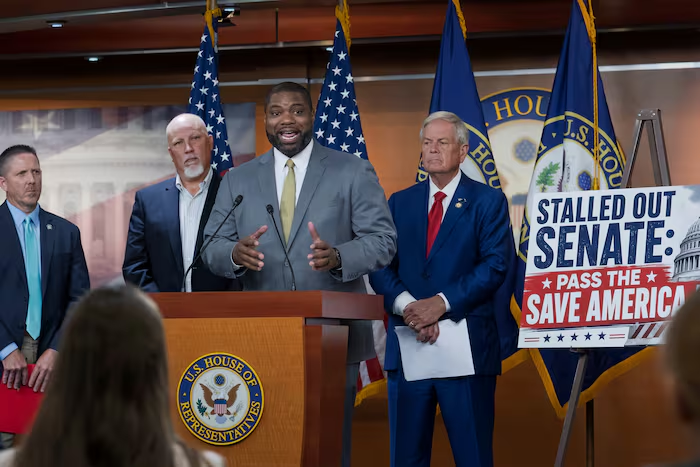
Byron Donalds, a Republican U.S. congressman and candidate for Florida governor, unveiled federal legislation Monday designed to shield utility ratepayers from the rising costs associated with massive artificial intelligence data center development. The proposal would mandate that data centers obtain all electricity and water from private sources rather than tapping into public power grids or municipal water systems, marking the latest political pushback against the rapid expansion of AI infrastructure nationwide.
Donalds characterized the measure as aligned with existing industry interests, noting that major technology companies would willingly absorb utility expenses if required by law. “The number one way you address and mitigate the concerns that people are having is to just ensure their utility bills aren’t going up in the process,” Donalds told The Associated Press, signaling confidence that tech firms recognize the political value of self-sufficiency.
The announcement carries particular significance given Donalds’ support from pro-AI political action committees and backing from President Donald Trump. Several major technology companies have already committed to voluntary agreements with the Trump administration pledging to finance new power infrastructure rather than burden residential consumers, though legal enforceability of these commitments remains questionable amid surging demand.
Florida has emerged as a focal point in the nationwide data center debate. More than 20 counties and municipalities have rejected or temporarily banned major data center projects, with residents and local officials citing concerns about elevated utility bills, community disruption and environmental consequences. Gov. Ron DeSantis, whom Donalds seeks to succeed, signed legislation in May requiring large-scale facilities to independently cover energy and water expenses.
Republican strategist Matt Gorman framed the data center issue as a rare point of convergence between progressive climate advocates and conservative populists, forcing technology companies to reshape their public messaging. Tech firms, he suggested, risk having policies imposed on them by bipartisan legislative coalitions unless they proactively address widespread apprehension about their expansion plans.
Donalds indicated his gubernatorial platform would emphasize data center efficiency and geographic placement away from residential areas. He framed the broader challenge as a national energy policy question, extending beyond data centers to future power generation requirements for all sectors of the economy.
James Fishback, a far-right Republican gubernatorial candidate, has made data center opposition central to his primary campaign against Donalds. Democratic frontrunner David Jolly, a former congressman, separately called for a statewide moratorium on new data center construction this month.
Travis Fisher, a fellow at the Cato Institute, attributed tech companies’ willingness to assume greater utility costs to mounting political pressure and reputational concerns. Companies fear losing community acceptance and face the prospect of local opposition campaigns that could effectively block their projects, Fisher said.

More Stories
Colombia backs Trump security push while limiting U.S. role in anti-gang operations
Former NFL cheerleader and ex-aide face off in close Rhode Island GOP primary
Chicago Mayor Issues Executive Order Requiring Contractor Diversity Disclosures and ICE Ties Reporting