




💛 A quick favor, if you've got a second.
We're really happy that you chose to read one of our stories and sincerely hope you'll stick around to read more. We took our paywall down — for now — but that won't last forever, and when the gate goes back up, we'd love for you to already be on the inside.
It's free. So please enter your email here and don't forget to like and follow us on all of your favorite Social Media platforms!
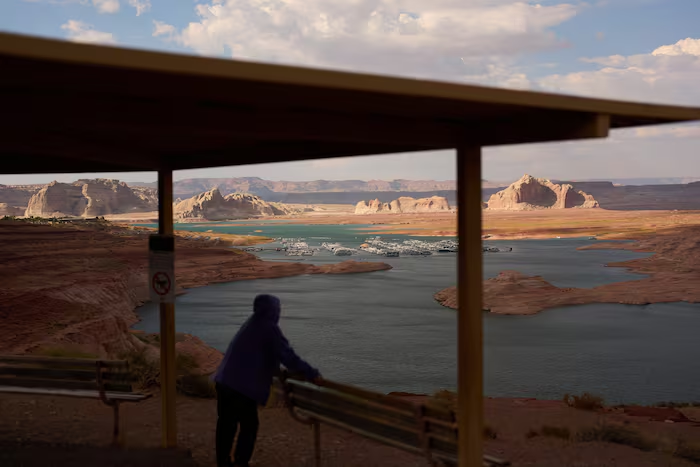
A newly announced federal strategy to manage diminishing Colorado River supplies has deepened concerns among communities and agricultural regions that depend on the waterway. The plan, unveiled by the Bureau of Reclamation, requires California, Nevada and Arizona to collectively reduce water consumption by 1.25 million acre-feet annually over the next two years—equivalent to filling more than 600,000 Olympic-sized swimming pools—with potentially larger reductions ahead.
Cave Creek, Arizona, a desert town of approximately 5,000 residents located near Phoenix, exemplifies the precarious position facing municipalities throughout the region. Mayor Robert Morris noted that despite implementing growth restrictions, reviving dormant wells and negotiating new water agreements, the town remains vulnerable to future shortages. The community already absorbed cuts this year and faces additional losses under the federal framework.
Nevada this week intensified the stakes by filing suit against the Interior Department and Bureau of Reclamation, contending that planned reductions of up to 70 percent for the Las Vegas region over the next decade will leave basic needs unmet. The bureau declined to comment on the litigation, citing policy protocol for pending legal matters.
Lake Mead and Lake Powell, the nation’s two largest reservoirs that serve as indicators for Colorado River system health, hit record lows this month. Eight additional reservoirs managed by the Bureau of Reclamation have recorded their lowest levels in at least three decades, including facilities in New Mexico, Colorado and Wyoming that supply water to farmers across multiple states.
Agricultural producers throughout the basin face mounting pressure when deciding whether to invest in new crops or plantings. John Boelts, president of the Arizona Farm Bureau and a vegetable and grain grower in Yuma—a region producing roughly 90 percent of North American leafy greens during winter months—said the temporary reprieve from cuts does not provide sufficient certainty for long-term planning. Perennial crops including citrus and dates require years before generating commercial returns, he explained.
Ray Martinez, who cultivates alfalfa on Colorado River Indian Tribes reservation land, has left fields unplanted for years to help stabilize Lake Mead levels. He and tribal water officials worry about securing adequate supplies to complete the current growing season, with additional surface water restrictions likely if reservoir conditions continue declining.
Tom Buschatzke, director of the Arizona Department of Water Resources, characterized the outlook as progressively negative. A record snow drought across the western United States has severely limited recharge to reservoirs, aquifers and snowpack systems that typically store water supplies for the region.



More Stories
Forest Service Proposes Steep Fee Increases at Lake Tahoe Recreation Sites
Son Discovers Father Missing After Himalayan Disaster in Nepal-Tibet Border Region
Month-Long HEPA Use Linked to Faster Cognitive Processing in Middle-Aged Adults