


💛 A quick favor, if you've got a second.
We're really happy that you chose to read one of our stories and sincerely hope you'll stick around to read more. We took our paywall down — for now — but that won't last forever, and when the gate goes back up, we'd love for you to already be on the inside.
It's free. So please enter your email here and don't forget to like and follow us on all of your favorite Social Media platforms!
 Written by Chief Political Correspondent, Dorian Lassiter
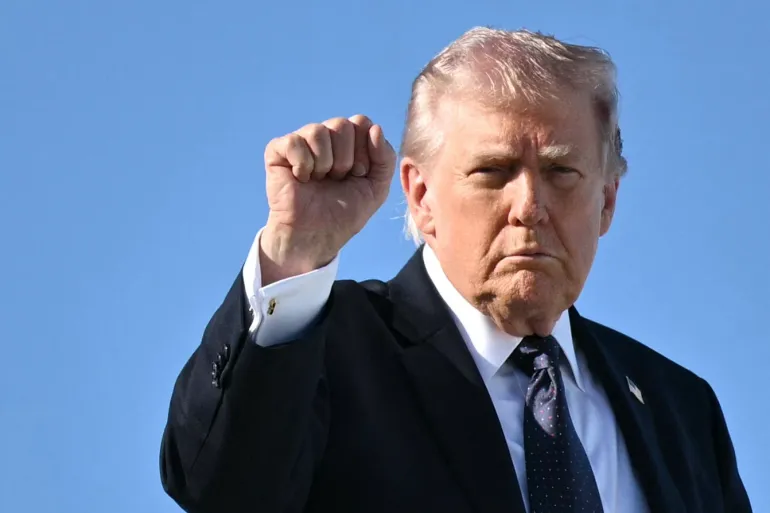
In the wake of Tuesday’s primary elections across several key states, a clear and unmistakable trend has emerged: 32 candidates endorsed by President Donald Trump secured decisive victories in their respective primaries, underscoring the enduring strength of the Trump movement within the Republican Party. At the same time, numerous incumbent Democrats who have positioned themselves as staunch opponents of the president lost seats they had held for years, despite long records of service and established local support. These outcomes extend far beyond the high-profile contests for U.S. Senate nominations in North Carolina and Texas. They offer a revealing snapshot of how the electorate is responding to the Trump administration’s swift and transformative policy shifts in Washington—ranging from aggressive immigration enforcement and economic restructuring to a renewed emphasis on national sovereignty—and whether the Democratic Party is successfully rebuilding popular support following its significant defeats in the 2024 general election.

The results from Texas, North Carolina, and Arkansas, which conducted primary and special elections on Tuesday, reveal a broader realignment. Voters appear to be rewarding alignment with the Trump agenda while rejecting candidates perceived as resistant to it, even among those with decades of incumbency. This pattern suggests that the administration’s rapid changes—implemented with characteristic speed and resolve—are resonating with Republican primary voters and, in some cases, even prompting shifts among independents and crossover Democrats. Conversely, Democrats who have built careers on opposition to Trump find themselves vulnerable, raising questions about the party’s strategic direction heading into the November midterms.
One of the most striking developments came in Texas, where Representative Dan Crenshaw became the first sitting member of the U.S. House of Representatives to lose re-election this cycle. Crenshaw, who had represented a Houston-area district since 2019, fell to Steve Toth, a right-wing state representative and vocal Trump supporter. Crenshaw’s defeat stemmed from several policy divergences: his public skepticism toward claims regarding the 2020 election, his willingness to negotiate with the previous administration on immigration reform, and his public disputes with conservative figures such as Tucker Carlson, who actively campaigned for his ouster. In the end, Toth captured nearly 56 percent of the vote to Crenshaw’s 41 percent. This outcome exemplifies how Trump-endorsed challengers are capitalizing on voter demand for unwavering loyalty to the administration’s priorities, toppling even well-known incumbents who once enjoyed broad Republican support.
The ripple effects extended to other Texas congressional races, where additional incumbents now face precarious futures. Two veteran representatives—Democrat Al Green and Republican Tony Gonzales—find themselves in runoff contests after failing to secure outright victories. Green, a long-serving Democrat known for his vocal protests against President Trump during joint addresses to Congress, is trailing newcomer Christian Menefee in a newly redrawn district created by mid-decade redistricting. Their contest, set for a May 26 runoff, pits Green’s established anti-Trump stance against Menefee’s fresher alignment with current national priorities. Meanwhile, conservative YouTuber Brandon Herrera leads Gonzales, a Republican who has resisted calls to resign amid serious allegations involving a former aide. Gonzales’s refusal to step aside, despite pressure from within his own party, appears to have alienated voters seeking stricter adherence to the administration’s ethical and policy standards. These races further illustrate the 32 Trump-endorsed wins nationwide: challengers backed by the president are not merely surviving but thriving, while incumbents who have resisted or equivocated are paying a political price.
In Arkansas, a special election for a state House seat delivered an unexpected demonstration of Democratic resilience in an otherwise solidly Republican state. Democrat Alex Holladay defeated Republican Bo Renshaw with 57 percent of the vote to 43 percent. Just two years earlier, a different Republican had narrowly beaten Holladay by a margin of 51 percent to 49 percent. While Holladay’s victory will not disrupt the Republican majority in the Arkansas House, it signals heightened Democratic enthusiasm and organizational energy—potentially a response to the Trump administration’s policy changes—that could carry into the midterms. This result stands in contrast to the broader national picture, where Trump-endorsed candidates continue to dominate Republican primaries, highlighting that Democratic gains remain localized and insufficient to offset the party’s broader challenges.
North Carolina provided further evidence of voter impatience with incumbents perceived as insufficiently aligned with either party’s core direction. Democratic state lawmakers Shelly Willingham, Nasif Majeed, and Carla Cunningham—all of whom had occasionally crossed party lines to collaborate with Republicans in overriding Democratic Governor Josh Stein’s vetoes—were decisively ousted. Their defeats reflect a rejection of compromise in an era of sharp partisan contrasts, particularly when those compromises appear to soften opposition to the Trump administration’s agenda. On the Republican side, state Senate leader Phil Berger, despite his long tenure and institutional influence, trails challenger Sam Page by just two votes. Page, the sheriff of Berger’s home county and a strong Trump supporter, mounted a campaign from the right, accusing Berger of leniency on immigration. Berger has requested a recount, but the razor-thin margin underscores the power of Trump-endorsed challengers to unsettle even entrenched Republican leadership. This race alone contributes to the tally of 32 successful Trump-endorsed primaries, reinforcing the message that loyalty to the president’s vision is now a prerequisite for Republican success.
Another closely watched contest in North Carolina involves Democratic Congresswoman Valerie Foushee, whose primary against progressive challenger Nida Allam remains too close to call. Allam, a Durham County commissioner, centered her campaign on opposition to a proposed large-scale data center project, framing it as a threat to local communities. Foushee has deferred the decision to local leaders while expressing personal reservations. With Allam trailing by approximately 1,200 votes and significant outside spending involved, a recount appears likely. Although this race does not directly involve a Trump endorsement, it illustrates the internal pressures facing Democrats: progressive insurgents are challenging moderates, yet the party as a whole continues to lose ground to the unified Republican message embodied in the 32 Trump-backed victories elsewhere.
Collectively, these results paint a portrait of an electorate energized by the Trump administration’s decisive actions. From border security enhancements to regulatory rollbacks and a focus on American manufacturing resurgence, the administration’s changes have galvanized Republican voters and, in select districts, exposed vulnerabilities among long-serving Democrats. The 32 Trump-endorsed primary wins represent more than isolated successes; they demonstrate a disciplined, nationwide effort to consolidate the party around a clear agenda. In contrast, Democratic incumbents who built careers on opposition to Trump—often framing their service in terms of resistance—now confront the reality that such positioning no longer insulates them from voter accountability.
As the nation moves toward the November midterms, these primaries serve as an early barometer. The Trump administration’s rapid implementation of its platform has not only consolidated Republican support but also forced Democrats to confront the limits of their post-2024 recovery strategy. Whether in the suburbs of Houston, the rural precincts of Arkansas, or the legislative halls of North Carolina, voters have signaled a preference for candidates who embrace rather than resist the current direction in Washington. The message is unambiguous: alignment with the Trump agenda delivers electoral rewards, while sustained opposition carries increasing political risk. The coming months will test whether Democrats can adapt or if the momentum of these 32 primary victories will translate into even broader Republican gains in the fall.

More Stories
Former NFL cheerleader and ex-aide face off in close Rhode Island GOP primary
University of Pennsylvania Climate Scientist Demands Supreme Court Packing Pledge From Democratic Candidates
Democratic Candidate Pia Dandiya Discusses House Race in District 22