


💛 A quick favor, if you've got a second.
We're really happy that you chose to read one of our stories and sincerely hope you'll stick around to read more. We took our paywall down — for now — but that won't last forever, and when the gate goes back up, we'd love for you to already be on the inside.
It's free. So please enter your email here and don't forget to like and follow us on all of your favorite Social Media platforms!
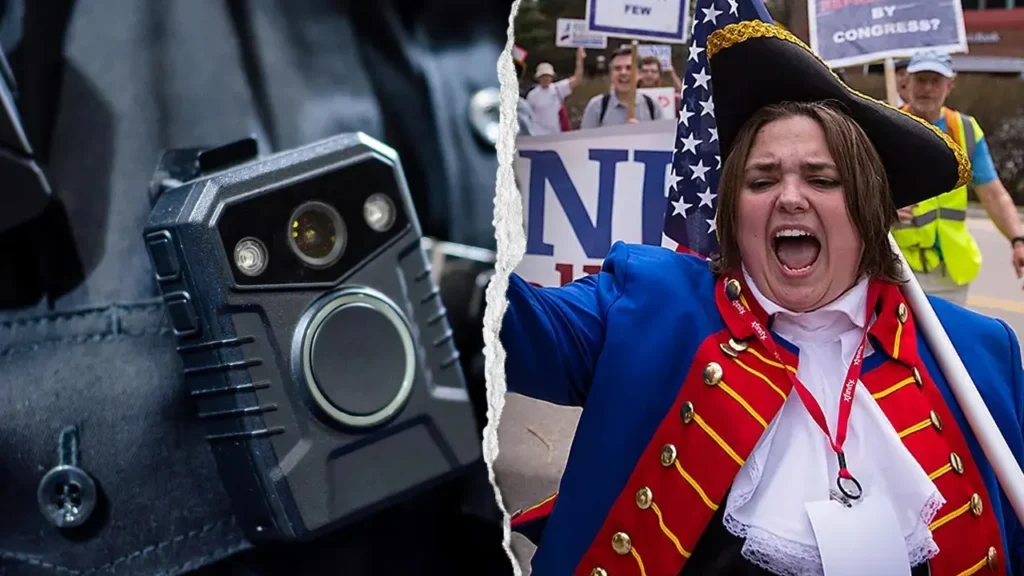
A traffic stop involving New Hampshire state Rep. Ellen Read has renewed scrutiny of police body camera usage across the country, with renewed focus on a Rockingham County Sheriff’s Office that operates without the recording devices. Read faces charges related to two traffic stops, one involving an allegation that she drove 107 mph, and has mounted a constitutional defense claiming the stops violated state protections for lawmakers traveling to legislative sessions.
The absence of recorded footage from either body cameras or dashboard cameras has become central to the legal proceedings. Rockingham County Sheriff’s Office Major Christopher Bashaw confirmed to media outlets that the agency lacks both types of recording equipment due to insufficient funding, though he indicated the office would welcome the technology if resources became available.
New Hampshire created a Body-Worn and Dashboard Camera Fund in 2021 designed to provide matching grants to municipal law enforcement agencies seeking to purchase recording devices and cover associated costs for maintenance and data storage. While all qualifying agencies may apply, state law does not mandate the use of body cameras, only establishing requirements for agencies that voluntarily adopt them.
Read has stated her consistent support for legislation authorizing body camera funding and indicated willingness to assist the Rockingham County Sheriff’s Office in securing grant money. She acknowledged her vehicle now has a dash camera installed following the incident and disputed the sheriff’s characterization of events, asserting she was traveling approximately 85 mph rather than the alleged 107 mph.
Legal experts have questioned the broad application of constitutional legislative immunity in this context. Lawrence Friedman, a professor at New England Law, stated that the centuries-old constitutional provision was designed to prevent delays to lawmakers’ legislative duties rather than provide blanket protection from prosecution for traffic violations or criminal conduct.
Sheriff’s officials countered that the constitutional provision was never intended to shield legislators from accountability for dangerous driving. Bashaw argued that accepting such an interpretation would create an untenable scenario where lawmakers could face serious charges like vehicular homicide without legal consequence simply because they held elected office.

More Stories
Federal voting arrest in New Jersey adds new pressure point in Sherrill-Trump standoff
Colombia backs Trump security push while limiting U.S. role in anti-gang operations
Former NFL cheerleader and ex-aide face off in close Rhode Island GOP primary