


💛 A quick favor, if you've got a second.
We're really happy that you chose to read one of our stories and sincerely hope you'll stick around to read more. We took our paywall down — for now — but that won't last forever, and when the gate goes back up, we'd love for you to already be on the inside.
It's free. So please enter your email here and don't forget to like and follow us on all of your favorite Social Media platforms!
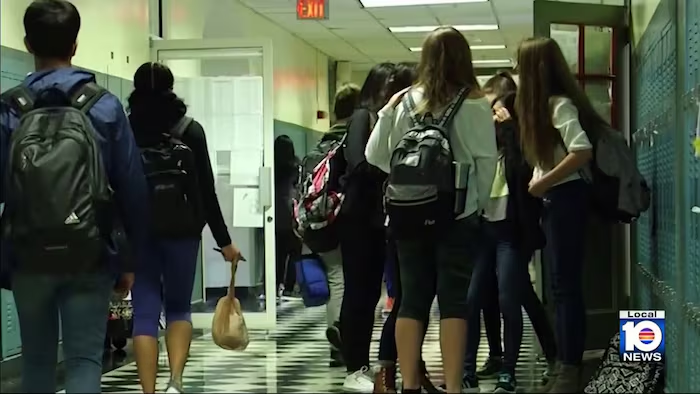
As the academic year gets underway, medical professionals are cautioning families about the dangers posed by excessively heavy backpacks worn improperly. The accumulation of textbooks, technology, and other school supplies can quickly add up, creating musculoskeletal strain in developing bodies. Dr. Skyler Kalady, who leads the primary care pediatrics division at Nationwide Children’s Hospital, emphasizes that parents must monitor the weight their children transport daily.
According to Kalady, the risks mirror those adults face when bearing excessive load on their spines. Children carrying backpacks beyond recommended limits face potential complications including cervical and lumbar strain. The solution requires parental vigilance in assessing both the quantity and distribution of items packed each morning.
Medical guidance calls for students to use both shoulder straps rather than slinging a bag across one side of the body. Proper positioning matters equally—the pack should rest at the small of the back and not dangle below the waist. These positioning practices significantly reduce injury risk among school-age populations.
Kalady recommends capping backpack weight at approximately 10 percent of a child’s body mass. For a 100-pound student, this translates to a maximum load of 10 pounds, a threshold designed to minimize injury likelihood. Regular purging of unnecessary materials at day’s end helps maintain this weight standard.
Should children experience ongoing discomfort, consultation with a pediatrician becomes necessary. In the interim, rest, ice application, and avoiding additional spinal load provide relief, with anti-inflammatory medications available per medical advice. Implementation of these preventive measures can keep students pain-free throughout the school term.

More Stories
Christa Pike Survives Botched Double Execution Attempt; Tennessee Halts Remaining 2026 Executions
Tennessee’s Lone Death Row Female is Scheduled for Execution Wednesday for 1995 Torture/Murder
Modern Science Finally Supports & Strengthens Biblical Account of the Crucifixion of Jesus Christ