


💛 A quick favor, if you've got a second.
We're really happy that you chose to read one of our stories and sincerely hope you'll stick around to read more. We took our paywall down — for now — but that won't last forever, and when the gate goes back up, we'd love for you to already be on the inside.
It's free. So please enter your email here and don't forget to like and follow us on all of your favorite Social Media platforms!
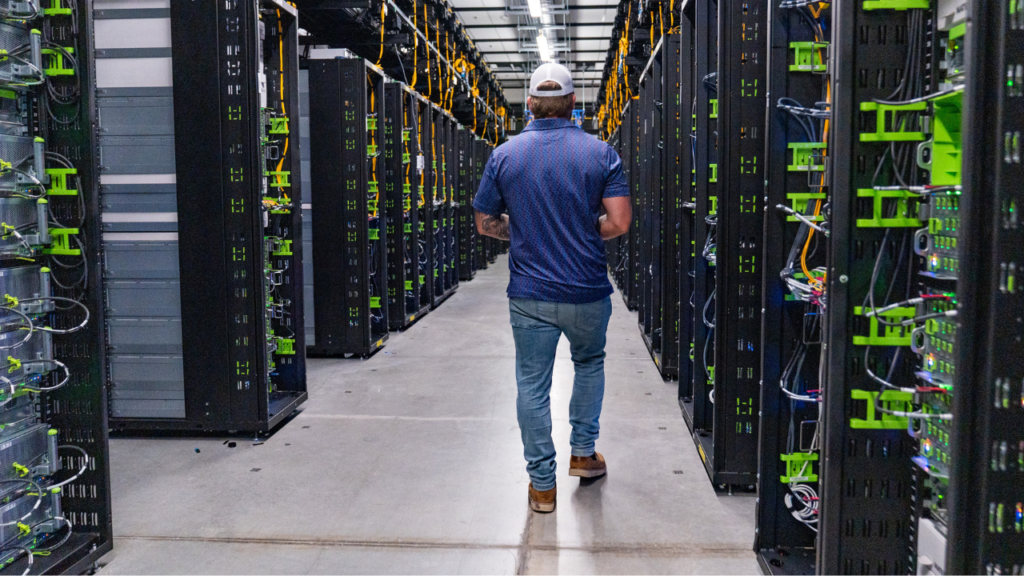
Nearly 4,600 data centers currently operate across the United States with thousands more under development, driven by $400 billion in spending during 2025 alone. The explosive growth has prompted an intensifying political backlash, with Democratic Gov. Kathy Hochul of New York announcing a statewide moratorium on hyperscale data centers while Republican Gov. Greg Abbott of Texas imposed a pause on new grid connections pending a state audit of projects.
At least 14 additional states are exploring comparable restrictions, including Maryland, Michigan, Minnesota, Wisconsin and Virginia, which hosts the world’s largest concentration of data center operations in its northern suburbs. These measures aim to shield residents from potential downsides, but critics contend they deprive communities of substantial economic benefits including tax revenue, construction employment and long-term capital investment.
The primary concern driving restrictions centers on whether data centers will elevate local electricity costs, though research suggests the worry lacks empirical foundation. When Lawrence Livermore National Laboratory analyzed retail electricity price increases from 2019 to 2024, analysts identified seven contributing factors, with data center demand appearing in none of them.
Major cloud computing providers and the White House have moved to mitigate grid strain risks, with companies including Amazon, Google, Meta, Microsoft, OpenAI and Oracle committing to fund 100 percent of required power infrastructure. Utilities across 19 states have additionally implemented large load tariffs requiring major consumers to pay for new generation and transmission capacity.
Communities securing data center projects have negotiated substantial local benefits through individual agreements. Lancaster, Pennsylvania obtained $20 million in economic development funding and commitments limiting noise and water usage, while Cedar Rapids, Iowa reached a community betterment accord with Google guaranteeing job creation and wage standards. Teachers in Richland Parish, Louisiana received bonus checks exceeding $51,000 from increased sales tax revenue tied to a nearby data center construction project.
State-level bans reflect what some characterize as luxury preferences imposed by residents in areas unsuitable for data center development onto struggling communities eager for economic opportunity. Policymakers should avoid both blanket prohibitions and forced installations while resisting pressure to provide unnecessary tax incentives to hyperscalers demonstrating willingness to invest independently.

More Stories
Federal voting arrest in New Jersey adds new pressure point in Sherrill-Trump standoff
Colombia backs Trump security push while limiting U.S. role in anti-gang operations
Former NFL cheerleader and ex-aide face off in close Rhode Island GOP primary