

💛 A quick favor, if you've got a second.
We're really happy that you chose to read one of our stories and sincerely hope you'll stick around to read more. We took our paywall down — for now — but that won't last forever, and when the gate goes back up, we'd love for you to already be on the inside.
It's free. So please enter your email here and don't forget to like and follow us on all of your favorite Social Media platforms!
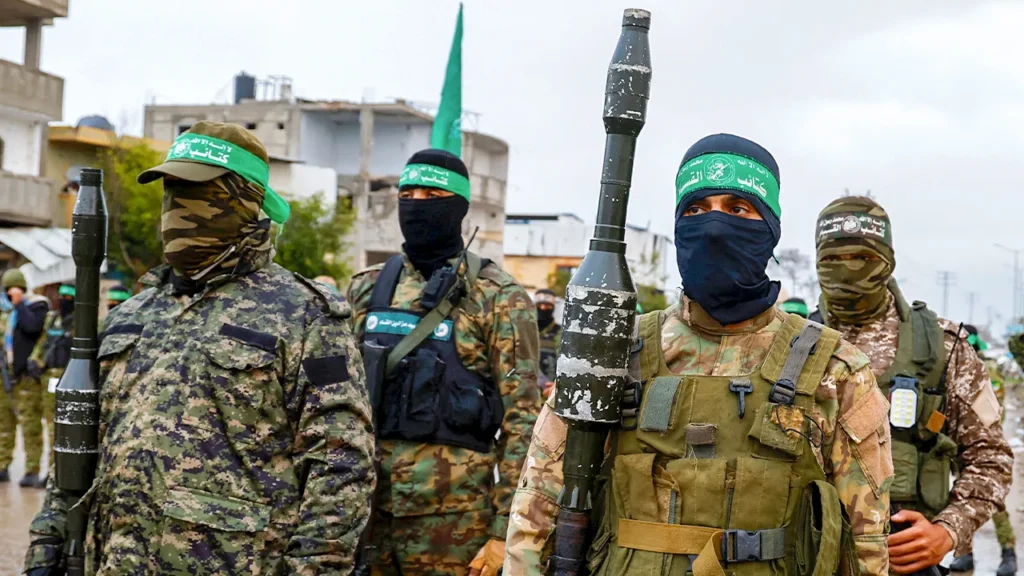
U.S. officials have long flagged concerns that Hamas diverts funds designated for civilian and humanitarian purposes to bolster its militant operations, raising questions about financial oversight as a new international body prepares to govern Gaza. The Treasury Department has pursued what it identifies as Hamas financing schemes, from covert investment accounts to fraudulent charities masquerading as relief organizations that actually bankrolled the group’s military apparatus.
The controversy intensified this week following reporting by Israel’s Kan News that the Board of Peace’s Gaza recovery blueprint includes a mechanism allowing up to $400 million in payments for debts incurred during nearly two decades of Hamas governance, encompassing wages owed to public workers, vendor bills and contractor fees. The central disagreement centers on whether settling such inherited financial obligations risks indirectly enriching Hamas or provides essential resources for a successor administration to maintain critical services and vendor relationships.
Nickolay Mladenov, the Board of Peace’s top Gaza representative, firmly denied accusations that the provision constitutes any form of financial arrangement with Hamas. On Wednesday, he stated in Hebrew on social media that claims of such an agreement were baseless and that no such proposal had ever been presented for discussion or negotiation, reiterating the Board’s commitment to complete Hamas disarmament and civilian rule supported by international security forces.
Republican Sen. Ted Cruz of Texas expressed serious reservations about the provision in comments to Fox News Digital, warning that terrorists exploit money’s fungible nature and gain legitimacy through international financing of their debts. Cruz noted that Congress previously barred funding to Palestinian governments in the West Bank for similar reasons and pointed out that international donors previously financed Hamas’s construction of terrorist infrastructure across Gaza.
A senior Board of Peace official speaking anonymously on Thursday countered that the roadmap does not commit to the full $400 million but rather represents a capped, three-year analytical process. The official stressed there is no binding financial obligation and that the successor Gaza administration would evaluate individual claims to determine whether paying certain debts is necessary to preserve essential services and legitimate business relationships.
The official characterized the process as analogous to corporate restructuring, where a new administration must assess inherited liabilities even as it permanently removes the previous governing entity. He cited the example of a European pharmaceutical company that supplied unpaid medicine to Gaza hospitals, arguing that resuming such critical supply chains might require settling certain outstanding invoices.
Regarding the timing of potential payments, the official confirmed that fund transfers would occur only in areas where Hamas has been disarmed, though he acknowledged that the successor administration would move into Gaza community by community as the group’s presence diminishes. He stated that if Hamas retained control in any location receiving funds, payments would be halted.
Cruz’s core objection rests on the principle of financial fungibility: if international donors cover debts Hamas incurred, resources the group might have allocated to those obligations could theoretically be redirected elsewhere. The Board official rejected this logic, arguing that Hamas is insolvent and had no intention of paying many creditors, so satisfying obligations represents a separate budgetary decision unrelated to Hamas’s finances.
The official added that the Board intends to pursue recovery of assets it believes Hamas stole and redirect those recovered funds toward legitimate debts where possible. Any additional funding needed would derive from regional partners rather than the United States, he said, and each dollar of the potential $400 million would face rigorous scrutiny before disbursement.

More Stories
Federal voting arrest in New Jersey adds new pressure point in Sherrill-Trump standoff
Colombia backs Trump security push while limiting U.S. role in anti-gang operations
Former NFL cheerleader and ex-aide face off in close Rhode Island GOP primary