

💛 A quick favor, if you've got a second.
We're really happy that you chose to read one of our stories and sincerely hope you'll stick around to read more. We took our paywall down — for now — but that won't last forever, and when the gate goes back up, we'd love for you to already be on the inside.
It's free. So please enter your email here and don't forget to like and follow us on all of your favorite Social Media platforms!
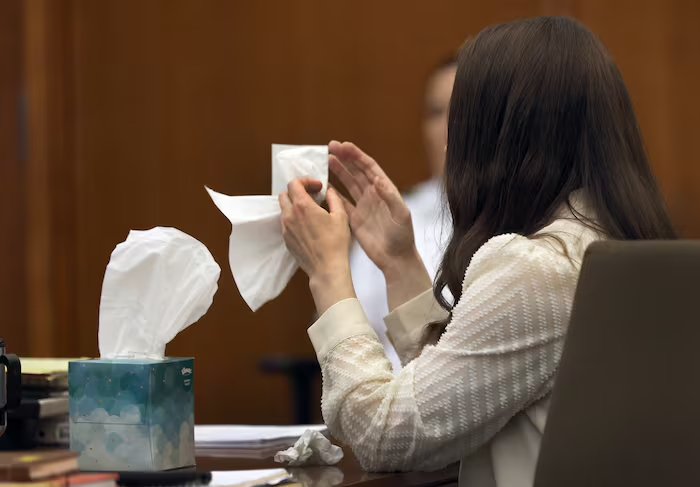
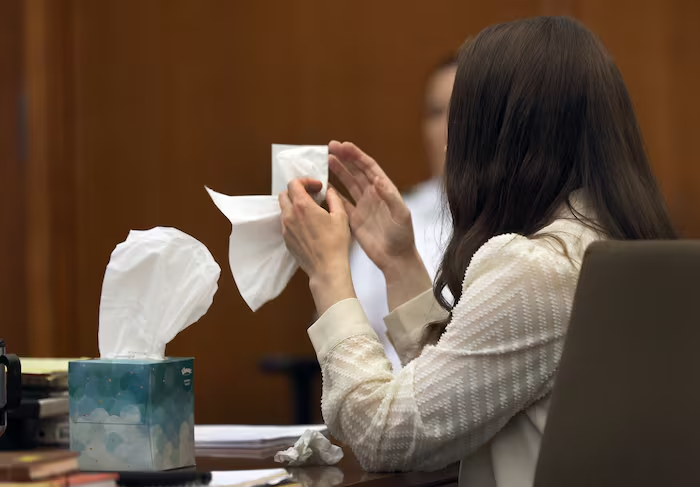
Lindsay Clancy became visibly distressed Thursday in a Plymouth, Massachusetts courtroom as jurors examined autopsy photographs related to the death of her 8-month-old son, prompting the judge to call an unexpected recess. The emotional outburst occurred during the second week of trial proceedings, as prosecutors presented evidence and witness testimony regarding the defendant’s mental state at the time of the alleged crimes.
Prosecutors called multiple witnesses including friends and a former colleague to characterize Clancy’s psychological condition surrounding the deaths of her three children: Cora, age 5; Dawson, age 3; and Callan, 8 months old. These individuals generally portrayed Clancy as an attentive parent who openly discussed her postpregnancy mental health difficulties, though most testified they did not observe suicidal or homicidal behavior.
The defense maintains that Clancy, 35, a former labor and delivery nurse, experienced postpartum psychosis, a severe psychiatric condition that distorts a patient’s perception of reality following childbirth. Prosecutors, however, argue she acted with deliberate intent when she killed the three children on January 24, 2023, after intentionally sending her husband away on errands.
Clancy has entered a not guilty plea to all murder charges. She sustained serious injuries that night, becoming paralyzed from the waist down after jumping from a second-story window. If convicted, she faces a life sentence without parole; if acquitted on grounds of lack of criminal responsibility, she would be committed to state psychiatric care.
Christopher Clancy, the defendant’s former father-in-law, testified that he observed signs of her declining health, including severe sleep disturbances and general malaise. He stated he had even suggested that the grandchildren stay with him and his wife, an offer his son declined.
Defense attorneys acknowledge Clancy caused the children’s deaths but assert she suffered from undiagnosed bipolar disorder at the time. They contend that psychiatric medications prescribed after the births may have exacerbated her condition, a claim the defense is pursuing through both the criminal trial and a separate medical malpractice lawsuit.
A parallel case involving Latarsha Sanders, who killed her two sons in 2018, has been returned to court following a decision by Massachusetts’ highest court. The state’s Supreme Judicial Court overturned Sanders’ murder conviction in the stabbing deaths of Edson “Marlon” Brito, 8, and La’son Brito, 5, citing insufficient psychiatric evidence presented to jurors.
Sanders told police she committed the murders after receiving text messages commanding her to perform a “ritual” connected to what she described as “Voodoo stuff” and the Illuminati. A defense neuropsychologist diagnosed her with schizophrenia spectrum disorder and testified she was “grossly psychotic” when the killings occurred.
The appellate court found that the trial judge improperly restricted jurors from hearing critical details from Sanders’ medical records, which contained independent clinical assessments suggesting schizophrenia and documenting decades of auditory hallucinations and delusional thinking. Justice Frank M. Gaziano wrote in the unanimous decision that withholding these records “impermissibly stripped” the defense of essential medical evidence.
Sanders’ defense attorney Robert F. Shaw Jr. stated he anticipated retrying the case with full access to medical documentation. Sanders currently remains incarcerated, and Shaw indicated he had not yet met with her to discuss the appellate ruling.

More Stories
Federal voting arrest in New Jersey adds new pressure point in Sherrill-Trump standoff
Packers Running Back Josh Jacobs Placed on NFL Commissioner’s Exempt List Following Domestic Arrest
Federal Prosecutors Convene Special Grand Jury to Investigate D.C. Schools’ Attendance and Graduation Practices