




💛 A quick favor, if you've got a second.
We're really happy that you chose to read one of our stories and sincerely hope you'll stick around to read more. We took our paywall down — for now — but that won't last forever, and when the gate goes back up, we'd love for you to already be on the inside.
It's free. So please enter your email here and don't forget to like and follow us on all of your favorite Social Media platforms!
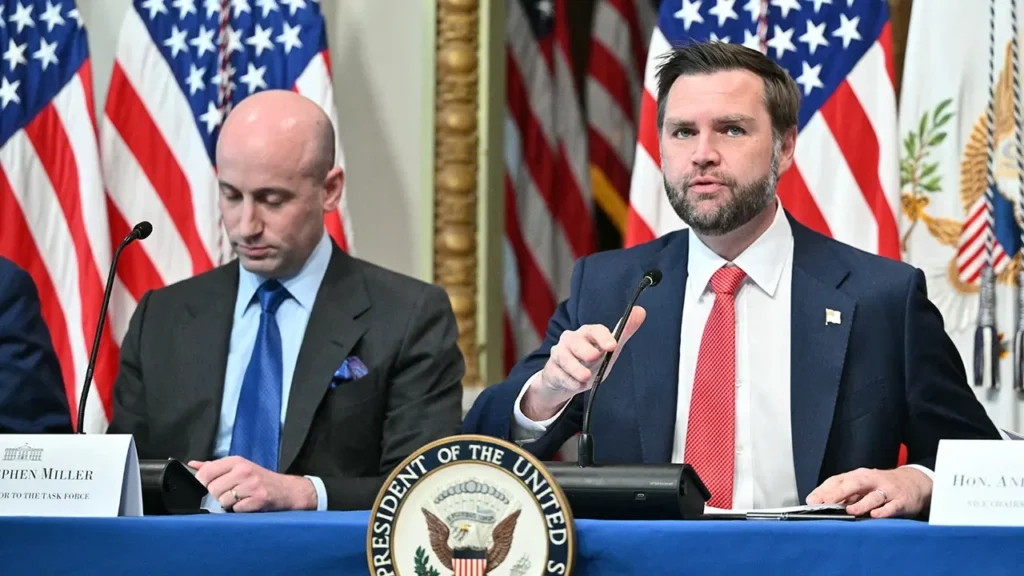
Vice President JD Vance, who leads President Trump’s Task Force To Eliminate Fraud, announced Wednesday that the initiative has uncovered $230 billion in suspected fraudulent activity. Speaking at a roundtable gathering with congressional members, Vance highlighted that the task force has already blocked $56 billion in fraudulent disbursements that would have otherwise reached bad actors instead of legitimate beneficiaries.
A central focus of the administration’s anti-fraud push involves increasing transparency in federal benefit distribution programs. Vance pointed to gaps in oversight within the Supplemental Nutrition Assistance Program, noting that the federal government currently lacks visibility into who ultimately receives food stamp benefits when funds flow to states. He cited scenarios where benefits could reach undocumented immigrants or individuals with criminal histories without proper federal or state detection.
To address these gaps, Vance called for legislative action requiring mandatory data-sharing protocols between state and federal authorities. The vice president argued that enhanced information-sharing mechanisms would allow officials to track benefit recipients more effectively and prevent ineligible individuals from accessing federal assistance programs.
White House Deputy Chief of Staff for Policy Stephen Miller escalated the administration’s enforcement proposals, advocating for mandatory minimum sentences for fraud convictions. Miller characterized stricter sentencing guidelines as transformative for deterrence, suggesting that prosecuting hundreds or thousands of cases annually could discourage millions from attempting fraudulent schemes.


More Stories
Colombia backs Trump security push while limiting U.S. role in anti-gang operations
Chicago Mayor Issues Executive Order Requiring Contractor Diversity Disclosures and ICE Ties Reporting
University of Pennsylvania Climate Scientist Demands Supreme Court Packing Pledge From Democratic Candidates