


💛 A quick favor, if you've got a second.
We're really happy that you chose to read one of our stories and sincerely hope you'll stick around to read more. We took our paywall down — for now — but that won't last forever, and when the gate goes back up, we'd love for you to already be on the inside.
It's free. So please enter your email here and don't forget to like and follow us on all of your favorite Social Media platforms!
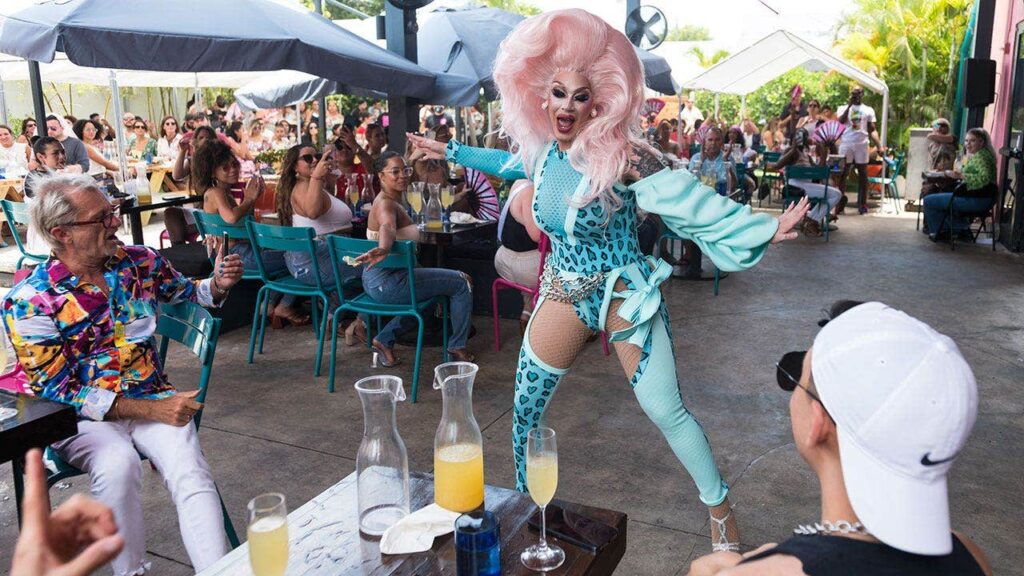
A sharply divided federal appeals panel has cleared the way for Florida to begin enforcing legislation backed by Gov. Ron DeSantis that bars children from attending sexually explicit live performances. The U.S. Court of Appeals for the 11th Circuit voted 8-5 on Tuesday to overturn a lower court’s block on the state’s Protection of Children Act, which the state contends targets obscene performances unsuitable for minors.
The ruling returned the case involving Orlando-based Hamburger Mary’s restaurant to federal district court for the Middle District of Florida. While the decision permits the state to enforce the measure, the restaurant retains the option to seek further judicial review of the measure’s constitutionality.
Florida Attorney General James Uthmeier announced the decision as a major triumph, writing on X that “the full court affirmed the constitutionality of Florida’s ban on children attending sexualized drag shows” after three years of litigation. The statute makes it a misdemeanor to knowingly admit a child to an adult live performance meeting specific criteria.
Under the law, an “adult live performance” is defined as a live presentation that depicts or simulates nudity, sexual conduct, sexual excitement or specific sexual activities, or features lewd conduct and lewd exposure of prosthetic or imitation genitals or breasts. The performance must also appeal predominantly to a prurient, shameful or morbid interest, be patently offensive for the child’s age and, when considered overall, lack serious literary, artistic, political or scientific value for that age group.
Judge Andrew Brasher, writing for the court majority, characterized the law as “a straightforward regulation of obscenity.” He wrote that preventing minors from attending live performances deemed obscene for them bears a rational relationship to Florida’s legitimate interest in protecting children’s welfare.
The majority rejected arguments from the restaurant that terms such as “lewd” and “the age of the child present” rendered the statute unconstitutionally vague or overbroad. Brasher noted that Florida Supreme Court precedent limits “lewd” to sexual conduct and that all three components of the obscenity test must be satisfied before a performance faces restriction.
Eight judges concluded that Hamburger Mary’s had failed to demonstrate a likelihood of success on its constitutional claims. Six justices signed onto Brasher’s complete opinion, while Judges Kevin Newsom and Britt Grant declined to join the section addressing the scope of universal injunctions.
Five judges filed dissenting opinions, with Judge Robin Rosenbaum arguing that venue operators would be forced to make educated guesses about which performances suit children of various ages while facing potential criminal charges, monetary penalties and business license revocation. Rosenbaum wrote that the decision embraces “mess-around-and-find-out (‘MAFO’) First Amendment jurisprudence” and said the law wields a “Titanic-sized iceberg of chilling power against protected speech.”
Judge Nancy Abudu filed a separate dissent examining the law’s legislative history, contending that statements by proponents and warnings from legislative staff supported the restaurant’s position that the measure would discourage lawful drag performances. The majority dismissed this argument, noting that courts typically do not invalidate otherwise constitutional statutes based on alleged improper legislative motivation.
The restaurant filed its lawsuit in 2023 following Florida’s enactment of the measure. Hamburger Mary’s stated that it had previously staged Sunday drag performances marketed to families but halted those shows and prohibited minors from other performances due to enforcement concerns. A federal district judge initially blocked the law’s enforcement, and a three-judge appellate panel initially affirmed that decision before the full court agreed to reconsider the matter.

More Stories
Federal voting arrest in New Jersey adds new pressure point in Sherrill-Trump standoff
Colombia backs Trump security push while limiting U.S. role in anti-gang operations
Former NFL cheerleader and ex-aide face off in close Rhode Island GOP primary