

💛 A quick favor, if you've got a second.
We're really happy that you chose to read one of our stories and sincerely hope you'll stick around to read more. We took our paywall down — for now — but that won't last forever, and when the gate goes back up, we'd love for you to already be on the inside.
It's free. So please enter your email here and don't forget to like and follow us on all of your favorite Social Media platforms!
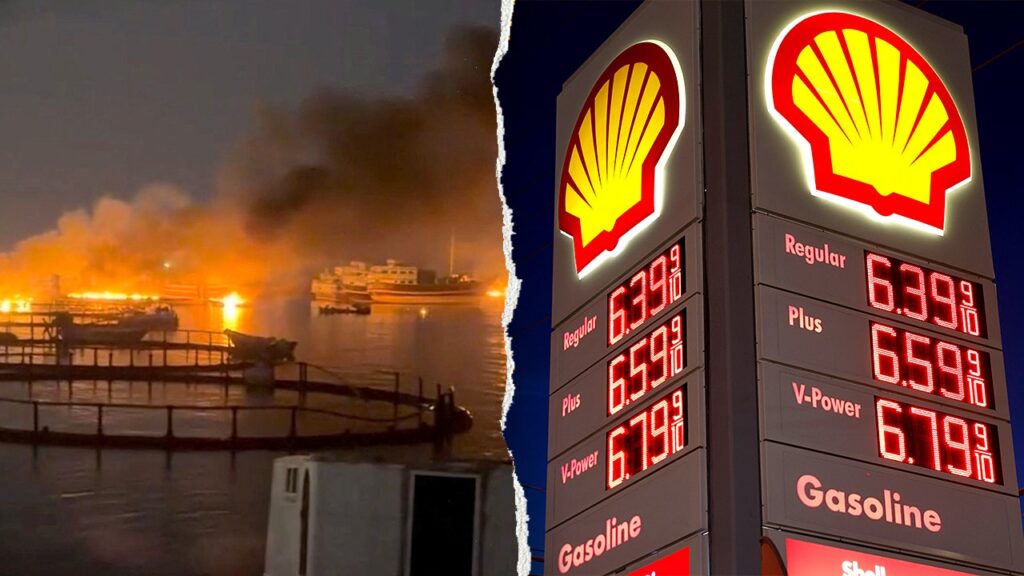
Chevron Chief Executive Officer Mike Wirth cautioned that intensifying geopolitical friction in Iran, combined with recent Houthi assaults on Saudi Arabian petroleum infrastructure, represents a concrete threat to worldwide oil availability. The executive’s warnings coincide with climbing crude valuations following President Donald Trump’s decision to postpone American military operations against Iran and reports that Saudi Arabia is assembling a multinational naval force to safeguard crucial sea corridors.
During an appearance on “Sunday Morning Futures,” Wirth emphasized that supply vulnerabilities have broadened beyond the historically problematic Strait of Hormuz to encompass additional maritime chokepoints. “We now see, not only the Strait of Hormuz, but the Red Sea and the Black Sea have risks and uncertainties. So, some of the challenges have expanded, and the risks to supply are very real,” he stated, characterizing global energy markets as “fragile and uncertain” amid the prolonged U.S.-Iran standoff and shrinking international oil reserves.
Recent assaults by Houthi militants on Red Sea shipping lanes have intensified apprehension regarding the stability of another crucial Middle East trade route. Wirth noted that deliberate targeting of energy infrastructure degrades the system’s ability to satisfy worldwide demand, with market recovery timelines dependent on how swiftly such assets return to operational capacity.
U.S. crude is trading near $84 per barrel, while the national average gasoline price stands at $4.09 per gallon—approximately $1 higher than the $3.15 average from one year prior, according to AAA data. Despite geopolitical headwinds, Chevron reported a 20 percent year-over-year production increase and recently achieved a U.S. record by producing more than 2 million barrels of oil equivalent daily.
The energy giant is exploring alternatives to mitigate shipping route vulnerabilities, including potential involvement in Iraqi oil fields that could be connected to Mediterranean markets through a new pipeline. Such infrastructure would circumvent transit through the Strait of Hormuz, the company is discussing with Iraqi officials.

More Stories
Colombia backs Trump security push while limiting U.S. role in anti-gang operations
Federal Prosecutors Convene Special Grand Jury to Investigate D.C. Schools’ Attendance and Graduation Practices
State Department Reissues Level 3 Travel Advisory for Israel Amid Terrorism and Armed Conflict Concerns