



💛 A quick favor, if you've got a second.
We're really happy that you chose to read one of our stories and sincerely hope you'll stick around to read more. We took our paywall down — for now — but that won't last forever, and when the gate goes back up, we'd love for you to already be on the inside.
It's free. So please enter your email here and don't forget to like and follow us on all of your favorite Social Media platforms!
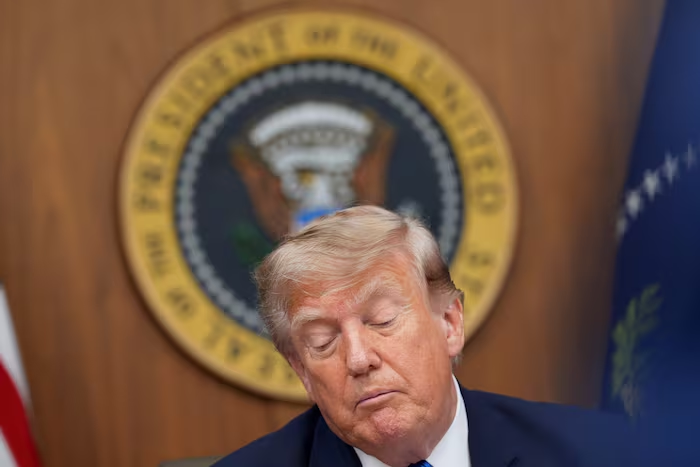
President Donald Trump’s efforts to force the Federal Reserve to slash interest rates have largely backfired, with borrowing costs climbing instead of falling since he returned to the White House. Trump spent months publicly pressuring the Fed to reduce its benchmark rates, arguing that lower costs would serve as “Rocket Fuel!” for economic growth and make housing more affordable for American families. The strategy has produced the opposite result, leaving his administration scrambling to explain rising mortgage and auto loan expenses to voters.
Interest rates on 30-year Treasury bonds have reached their highest levels in nearly two decades, directly contradicting Trump’s promises to voters. The 10-year Treasury note surged above 4.7% on Friday, exceeding the rate he inherited when taking office last year. Treasury spending on debt service has ballooned to $827 billion through the current fiscal year, surpassing the government’s defense budget allocation.
Multiple factors have driven the rate increases, including Trump’s own policy initiatives. Tariffs imposed last year triggered such sharp rate jumps that the administration was forced to revise them. Large-scale financing for artificial intelligence data centers has also contributed to upward pressure on rates, while the conflict in Iran has fueled oil price volatility and inflationary concerns.
Federal Reserve Chair Kevin Warsh, selected by Trump, acknowledged in recent remarks that inflation remains elevated but offered no timeline for rate reductions. Instead, Warsh suggested that market forces rather than central bank decisions should determine rates—a stance that contradicts Trump’s expectations for his appointee. The next Fed meeting on rates is scheduled for September 16, with financial markets currently anticipating potential rate increases.
White House spokesman Kush Desai claimed that resolving the Iran conflict would reduce energy costs and eventually enable Fed rate cuts. However, this projection offers little immediate relief to Republican candidates facing November elections worried about voter frustration over affordability. Housing affordability has emerged as a particularly weak point, with the administration’s effort to purchase $200 billion in mortgages through Freddie Mac failing to meaningfully reduce rates.
Economic research from Georgetown University economist Juan Felipe Riaño suggests Trump’s messaging has struggled because voters prioritize whether their wage growth outpaces inflation. Over the past 12 months, hourly wage gains have barely kept pace with inflation, and borrowing costs have outpaced both. This dynamic previously hurt Democrats in 2024 and could now damage Republicans if the trend continues through the fall.
Trump dismissed a bipartisan housing bill as a “big yawn” and allowed it to become law without his signature, further complicating Republican efforts to campaign on economic solutions. Mortgage rates through Freddie Mac averaged 6.66% on Thursday, essentially flat compared to a year earlier. The disconnect between Trump’s economic claims of unprecedented success and voter concerns about affordability has become increasingly evident.


More Stories
Former NFL cheerleader and ex-aide face off in close Rhode Island GOP primary
Trump Threatens FCC Action Against NBC’s Welker Over Endorsement Coverage
University of Pennsylvania Climate Scientist Demands Supreme Court Packing Pledge From Democratic Candidates