



💛 A quick favor, if you've got a second.
We're really happy that you chose to read one of our stories and sincerely hope you'll stick around to read more. We took our paywall down — for now — but that won't last forever, and when the gate goes back up, we'd love for you to already be on the inside.
It's free. So please enter your email here and don't forget to like and follow us on all of your favorite Social Media platforms!
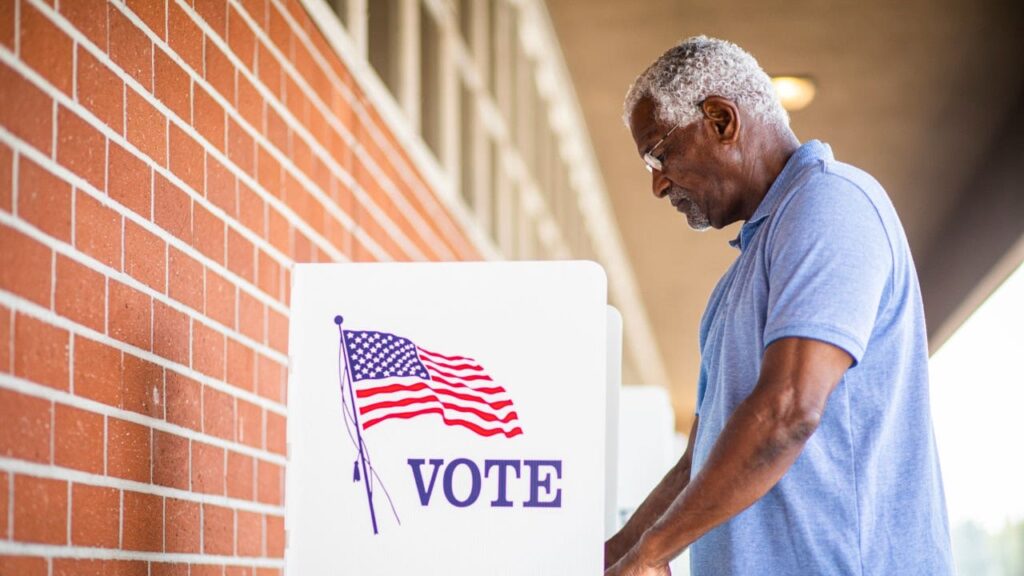
Internet security researchers have identified a growing threat facing voters heading into the 2026 midterm elections: fraudulent websites designed to impersonate legitimate political campaigns. WhoisXML API, an internet intelligence firm, discovered 62,081 election-related domain registrations created since September 2025, with 13,645 displaying characteristics of official campaign sites. While many of these domains may serve legitimate purposes, a subset operates as active storefronts collecting donations and selling merchandise under false pretenses.
Scammers exploit the visual similarities between authentic and counterfeit campaign websites to deceive unsuspecting donors. These fraudulent operations typically incorporate familiar branding elements, professional product photography, and polished checkout pages that closely mirror legitimate campaign infrastructure. The research identified live storefronts accepting donation-style payments as high as $1,000 while processing transactions through their own payment systems rather than official campaign channels.
Domain registration patterns reveal how scammers mimic real campaign websites. Nearly 46% of suspect domains used naming structures such as “[name]for[office]” or “for[state],” matching formulas employed by legitimate campaigns. Texas led state-based registrations with 537, followed by Florida, Georgia, Ohio, and Colorado. Researchers found that 90% of domains concealed registrant identity information, while 88% utilized one-year registration terms—details that can appear legitimate but warrant scrutiny when combined with campaign branding and payment requests.
Small variations in domain names create significant vulnerability, particularly for mobile users. Researchers highlighted massiemoneybomb[.]us, which closely resembled the legitimate massiemoneybomb[.]com fundraising address, differing only in the final domain extension. Similarly, kenpaulus[.]us was only 58 days old when examined, while the authentic kenpaxton[.]com had existed since 2008. Such minor differences easily escape notice on smartphone screens when accessed through direct links in text messages or social media posts.
The sophistication of fake campaign sites continues to increase through artificial intelligence technology. Researchers report that AI-powered tools enable operators to construct convincing websites rapidly and at scale, making visual appearance an unreliable verification method. Some fraudulent storefronts demonstrated conflicting merchandise offerings, selling products supporting a candidate alongside merchandise attacking the same individual—a clear indicator of lacking official campaign authorization.
Federal Election Commission disclaimer requirements offer one verification layer for identifying unauthorized campaign websites. Legitimate federal political committee websites must display disclaimers identifying who paid for communications and whether candidates authorized them. Missing, vague, or mismatched disclaimers provide strong reasons to abandon a website and verify its legitimacy through official channels. However, deceptive operators can copy legitimate committee names, making disclaimers one clue rather than definitive proof.
Voters should employ multiple verification strategies before providing personal information or payment details. Rather than clicking links from unsolicited texts, emails, advertisements, or social media, independently search for candidates and compare results with their verified social media accounts and established public profiles. The Federal Election Commission’s campaign finance database at fec.gov/data/ allows voters to verify registered candidates and committees for federal races, while state election authorities maintain equivalent databases for local contests.
Payment processor selection indicates another potential warning sign. Legitimate campaigns typically route contributions through secure.actblue.com or secure.winred.com. While some campaigns use alternative processors, unfamiliar payment providers should trigger additional scrutiny. Voters should examine the complete domain name in their browser’s address bar before entering sensitive information, watching for variations such as “.us” substitutions, added words like “official” or “store,” hyphens, or alternative endings such as “.vote” or “.store.”
Consumer protection experts recommend using credit cards rather than debit cards for political contributions, as credit cards offer stronger dispute protections and prevent direct access to checking accounts. Voters should preserve receipts and screenshots documenting the full domain, product pages, and checkout screens. After payment, confirming bank statements ensure the correct amount was charged and that recurring contributions were not initiated without authorization.
Researchers found no direct evidence that donors lost money or experienced data misuse from the identified domains, though payment platforms possess data not included in this study. The findings underscore the importance of caution rather than confirm widespread fraud. Campaign operators face practical limitations in securing every possible domain variation and should instead focus on consistently promoting one official domain and donation link while monitoring newly registered look-alike sites during their initial days online.
Pressure tactics frequently accompany fraudulent campaign sites, employing limited-time donation matches and countdown clocks that reset repeatedly to encourage immediate action. Voters should resist these manipulative techniques and conduct independent verification before providing contributions. Two-factor authentication should be enabled when creating accounts on campaign websites, while password managers should generate unique passwords to prevent credential reuse across multiple accounts.


More Stories
Former NFL cheerleader and ex-aide face off in close Rhode Island GOP primary
Packers Running Back Josh Jacobs Placed on NFL Commissioner’s Exempt List Following Domestic Arrest
Federal Prosecutors Convene Special Grand Jury to Investigate D.C. Schools’ Attendance and Graduation Practices