




 Written by Senior Political Correspondent Dorian Lassiter
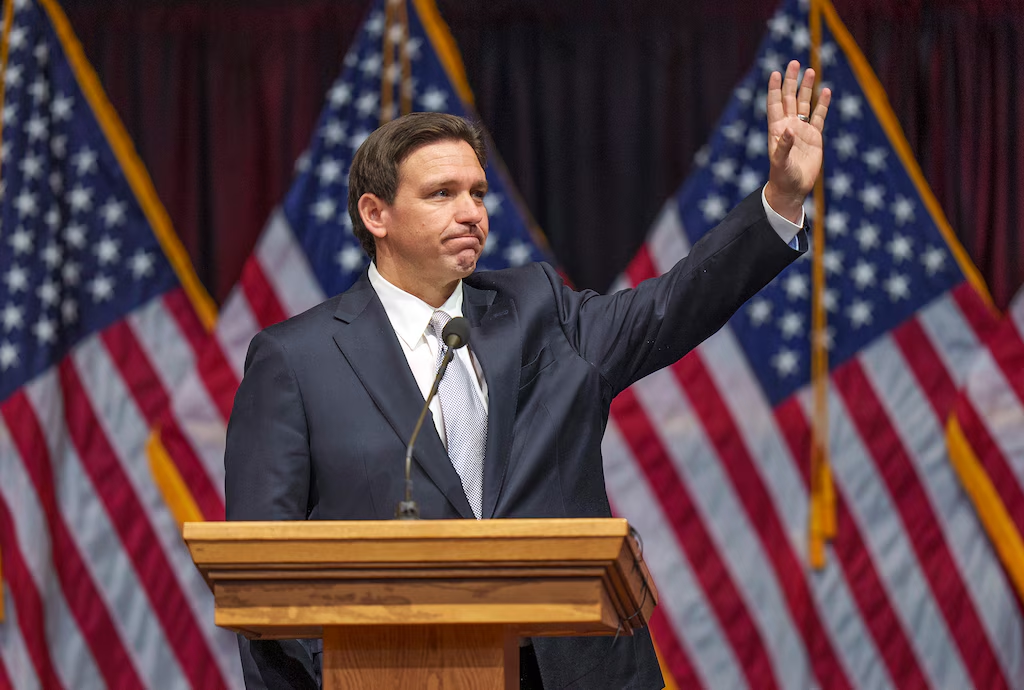
TALLAHASSEE — Florida lawmakers have approved a sweeping election reform measure that would require proof of U.S. citizenship for voter registration and tighten identification standards at polling places, sending the bill to Gov. Ron DeSantis for final consideration.
The legislation, CS/CS/HB 991, titled the Election Integrity Act, cleared the Florida House on March 12, 2026, in a 77–28 vote, just hours after the Florida Senate passed the measure 27–12. With legislative approval complete, the bill now awaits the governor’s signature. If enacted, the measure would establish new requirements for voter registration in Florida, including the submission of documentation verifying U.S. citizenship. Under the bill, individuals registering to vote would be required to present documents such as a REAL ID–compliant Florida driver’s license, a U.S. passport, or a birth certificate as proof of citizenship. State officials would also be directed to verify citizenship information through records maintained by the Florida Department of Highway Safety and Motor Vehicles (DHSMV).
Supporters of the measure argue that the proposal strengthens safeguards around voter eligibility and ensures that only U.S. citizens participate in elections. The legislation also calls for the state to introduce citizenship status markers on newly issued or renewed driver’s licenses and identification cards beginning January 1, 2027. Those markers would allow election officials to more easily verify citizenship during the voter registration process. Beyond voter registration requirements, HB 991 includes several additional changes to Florida’s election procedures. One provision designates paper ballots as the primary method of voting statewide, a move supporters say enhances auditability and provides a more secure record of votes cast. The bill also modifies the types of identification that voters may present at polling places. Certain forms of identification that had previously been accepted — including student identification cards and some retirement community IDs — would no longer qualify as valid voter identification under the new rules.
Advocates of the legislation say the changes bring greater consistency to Florida’s identification standards and align voter verification procedures with documentation commonly used for other official purposes. Critics, however, have raised concerns that the new requirements could create additional hurdles for some eligible voters, particularly those who may not readily possess the specific documents required to prove citizenship. Lawmakers who opposed the bill during floor debate argued that existing safeguards already prohibit non-citizens from voting and questioned whether additional documentation requirements were necessary. Supporters countered that the legislation is designed to reinforce confidence in the state’s election system and prevent potential vulnerabilities before they arise.
The measure’s timeline delays the implementation of most provisions until January 1, 2027, a date that falls after the 2026 midterm elections. Lawmakers said the delayed effective date will give state agencies time to implement the new verification procedures and update identification systems before the law takes effect. In particular, the Department of Highway Safety and Motor Vehicles would be responsible for modifying driver’s licenses and identification cards to include the new citizenship indicators required by the bill.
Florida has enacted several election-related reforms in recent years, many of them framed as efforts to increase transparency and security in the voting process. HB 991 represents one of the most significant recent proposals aimed at tightening voter eligibility verification. Gov. DeSantis has not yet announced whether he intends to sign the bill, though his administration has previously supported a number of election security measures passed by the Republican-controlled Legislature.
If signed into law, the measure would place Florida among a small but growing number of states that require documentary proof of citizenship during the voter registration process. State election officials would then begin preparing for implementation ahead of the 2027 effective date, when the new registration and identification requirements are scheduled to take effect.



More Stories
The Florida Sun Journal: A Return to Crokitean Journalism
Dems Stunned as a Whopping 32 Trump Endorsed Candidates Earn Victories in Pre-MidTerm Primaries